Drivers of Bus Rapid Transit Systems – Influences on Ridership and Service Frequency
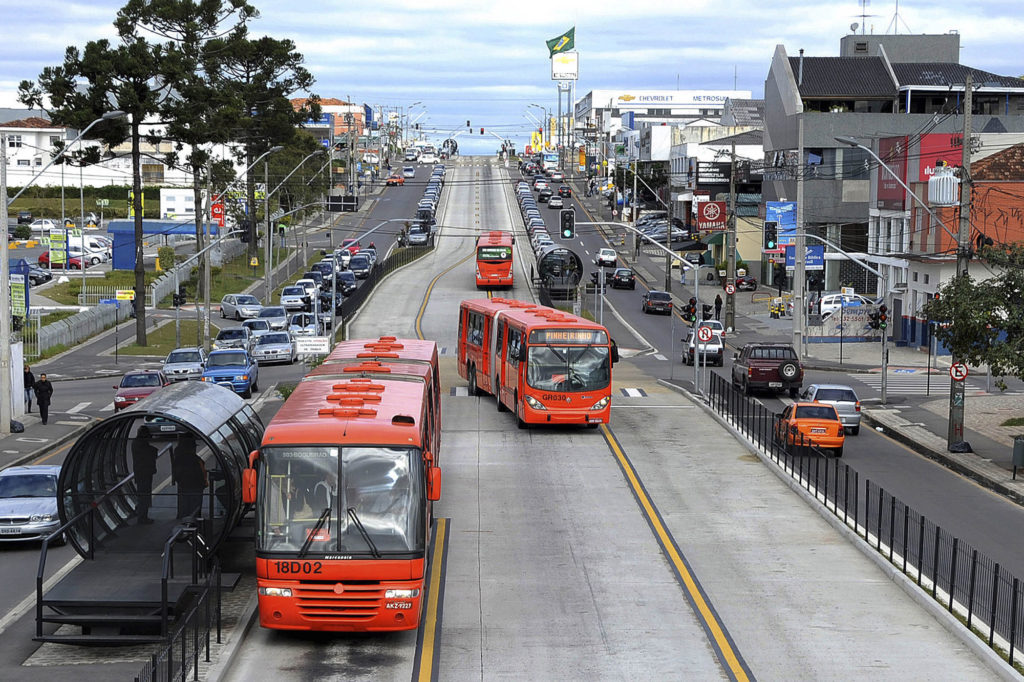
This document reports the findings of a comparative analysis of bus rapid transit (BRT) performance using information on 121 BRT systems throughout the world, in which random effects regression is employed as the modelling framework. A number of sources of systematic variation are identified which have a statistically significant impact on BRT patronage in terms of daily passenger numbers such as fare, frequency, connectivity, pre-board fare collection, and location of with-flow bus lanes and doorways of a bus. In addition to the patronage model, a bus frequency model is estimated to identify the context within which higher levels of service frequency are delivered, notably where there exists higher population density, more trunk lines, the corridor provides bus priority facilities such as priority lanes for many bus routes, and where there is the presence of overtaking lanes at more than half of all stations along the heaviest section of the corridor. The findings offer important insights into features of BRT systems that are positive contributors to growing patronage which should be taken into account in designing and planning BRT systems.
Download full report.
Does the choice model method and/or the data matter?
The opportunity to have seven data sets associated with a stated choice experiment that are very similar in content and design is rare, and provides an opportunity to look in detail at the empirical evidence within and between each data set in the context of a range of discrete choice estimation methods, from multinomial logit to latent class to scale multinomial logit to mixed logit, and the most general model, generalized mixed multinomial logit that accounts for preference and scale heterogeneity. Given the problems associated with data from different countries and time periods, we estimate separate models for each data set, obtaining values of travel time savings that are then updated post estimation to a common dollar for comparative purposes. We also pooled all data sets for a scaled MNL model, treating each data set as a set of three separate utility expressions, but linked to the other data sets through scale heterogeneity. This is not behaviourally appropriate with MNL, latent class or mixed logit. The main question investigated is whether there exists greater synergy in the willingness to pay evidence within model form across data sets compared to across model forms within data sets. The evidence suggests that there is a relatively greater convergence of evidence across the choice models, with the exception of generalized mixed logit, after controlling for data set differences; and there is strong evidence to suggest that differences between data sets do matter.
Tampa breaks ground on first bus rapid transit line
Source: Roads & Bridges
Tampa, Florida, USA, city officials broke ground on August for a new bus rapid transit line expected to open in spring 2013. The new line is part of the growing MetroRapid system, the city’s first BRT service.
Hillsborough Area Rapid Transit (HART) will oversee the project, which will connect downtown Tampa with Fletcher Avenue and I-75. The agency estimates that bus rapid transit will shorten the travel time of the 17.5-mile route by approximately 15 percent.
BRT would act as a viable public transit alternative to high-speed rail, a plan for which was vetoed by Gov. Rick Scott in 2011.
Funding for the project will largely come from the Hillsborough County Community Investment Tax. Monetary breakdown includes $31 million for design, land acquisition and construction; $1.75 million for a park-and-ride facility on Fletcher Avenue; and $2 million for transit signal priority, which allows buses to automatically get green lights at major intersections.
The north-south route will ultimately join up with an east-west line that includes Tampa International Airport and the Westshore Business District.
¿Comments? ¿Opinions? ¿Similar News? Send them to us!
Tweet
Ciudades Sostenibles Estructuradas a Partir del Transporte – Una mirada al Plan de Movilidad Bogota Humana
Download presentation here (in Spanish).
NAMA Transporte Integrado Belo Horizonte, Brasil
Download presentation here (in Spanish).
New kids on the Latin American Block: Line 4 Mexico, Transoeste Rio de Janerio, Fase III TransMilenio, Bogotá
BRT continues its strong growth in Latin America in 2012. Mexico City expanded its network through its historic downtown. Rio de Janeiro opened its first full BRT corridor, the first installment of a 150 km network to be ready before the summer Olympics in 2016. Bogotá opened sections of TransMilenio Phase III, which will expand the system to 104 km by the end of 2012. This presentation will discuss particular aspects of each system, showing the evolution of BRT design concepts, as well as some challenges
Prioridades sobre Transporte Masivo para Bogota
Transporte en la Economía Verde
Transporte Sostenible: Paradigma Evitar-Cambiar-Mejorar
Download presentation here (in Spanish).
A review of technological improvements in BRT and BHLS
New Publication: Sustainable Development 2012-2050
Source: EMBARQ
Photos: Mariana Gil / EMBARQ Brazil.
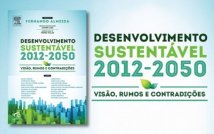
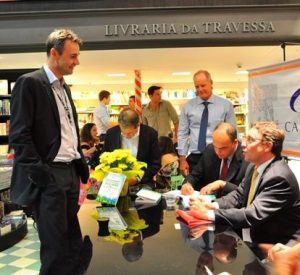
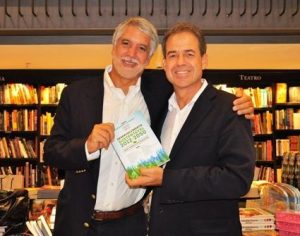
More than a year ago, engineer Fernando Almeida began convening 19 experts in various fields of sustainability to publish Desenvolvimento Sustentável 2012-2050: Visão, Rumos e Contradições («Sustainable Development 2012-2050: Vision, Ways and Contradictions.») The collection was launched on June 15 in Rio de Janeiro. The book is marked by a transdisciplinary approach to issues such as environment, climate, economy, transportation, and others, all issues relevant to discussions on the agenda at Rio+20.
Between pages 175 and 193, the reader will find the chapter «Sustainable Transport in the Urban Century», by Director of EMBARQ Brazil and member of our Centre Luis Antonio Lindau, the former president of the World Resources Institute (WRI) Jonathan Lash, and political scientist Jacob Koch.
 The night-time launch was attended by Director of EMBARQ Holger Dalkmann, as well as EMBARQ’s Chief Operating Officer Clayton Lane, EMBARQ Brazil’s Director of Strategic Relations and Development Rejane D. Fernandes and former mayor of Bogotá (1998-2001) Enrique Peñalosa.
Below is an excerpt from the conclusion of «Sustainable Transport in the Urban Century»:
Cities are at a crossroads in our battle against poverty, climate change and environmental degradation. We have a choice to make. We have before us two paths. The cities can be the engine of change and transformation and point the way towards a sustainable future; a life with low greenhouse gas emissions and continued prosperity. Or cities can lead to consumption patterns that pollute, irrevocably destroy and hurt our fragile planet and increase the gap between rich and poor.
The carbon footprint of people living in cities served by a system of high-density, mixed transportation is smaller than those living in regions that depend on the car to get around. They are also happier, richer and safer. Where you live determines your lifestyle and your environmental impact.
Are Brazilian cities ready to face the challenges and make the right choices for a sustainable future? Are they ready to compete with other cities in the world for international investments? Or will chronic lack of infrastructure prevent the expected growth? Will local governments obtain the technical capability and expertise to plan and implement complex transportation projects? Where will the next ideas to push the city forward come from? Who will propose the next innovation in sustainable transport?
The short-term thinking prevalent among politicians concerned with the next election will not be enough. Without the voice of the people demanding policy decisions promoting sustainable transport, it is unlikely that the current situation will improve.
Cities need to inspire a leadership dedicated to planning long-term sustainability to receive the permanent changes they need.
¿Comments? ¿Opinions? ¿Similar News? Send them to us!
Tweet
New Global Database on Bus Rapid Transit Launched
BRTdata.org provides most robust data to improve mobility and reduce carbon emissions from transit
Editor’s note: A webinar on the new brtdata.org database was held on Tuesday, April 10, at 12:00 p.m. EDT. Watch the recorded webinar here.
Washington (April 2, 2012) – Four global organizations have teamed up to launch the most comprehensive, public database of bus rapid transit (BRT) systems around the world. The new site, BRTdata.org, was created by the Across Latitudes and Cultures Bus Rapid Transit Centre of Excellence through EMBARQ, the World Resources Institute’s center for sustainable transport. The Database was created in collaboration with the International Energy Agency (IEA) and the Asociación Latinoamericana de Sistemas Integrados de Transporte y BRT (SIBRT).
BRT is one of the fastest growing public transport systems. Approximately 134 cities worldwide— from Bogota to Beijing— have implemented BRT systems or priority bus corridors, serving more than 22 million passenger trips daily.
BRT is a mode of public transport that flexibly combines stations, vehicles, services, running ways and intelligent transportation system elements into an integrated system.
“The new website provides reliable and up-to-date data to help researchers, transit agencies, city officials, and NGOs understand and make better decisions to improve BRT and bus corridors in their cities,” said Dario Hidalgo, member of ALC-BRT CoE and Director of Research and Practice, EMBARQ. “This is the first time that all of this publicly available data has been compiled in one place, but there is still more information available. We invite transit agencies and researchers to help us improve the knowledge base by sharing additional data to fill in the gaps.”
The new website allows users to compare BRT systems and bus corridors in all 134 cities in 36 countries. The database includes 95 different indicators on system operations, design and cost, including metrics like the number of passengers per day, commercial speed, and the length of corridors.
There is growing interest and demand for BRT as cities seek low-cost, sustainable urban transportation solutions. As the number of BRT systems increases, it is important to have current, accurate, and complete information about existing and planned systems.
The development of an online database was a joint data-sharing effort. EMBARQ and ALC-BRT CoE collected data mostly from Latin America, and the IEA contributed data from other regions.
“Previously, there was no single point of publicly accessible information about the worldwide BRT industry, and it was especially difficult to get an assessment of the industry’s size and how it was changing over time,” ALC-BRT CoE Director Juan Carlos Munoz said. “We finally have the right tools to set standards for this dynamic industry.”
Using information from this dataset, the IEA has estimated the energy and carbon dioxide (CO2) benefits of BRT implementation, and outlined several CO2-mitigation scenarios that rely in part on modal shift from light duty vehicles to public transit, including BRT. The IEA plans to recognize the extensive potential of BRT in its upcoming biennial report, “Energy Technology Perspectives 2012,” calling for the total network length of BRT systems to double by 2020.
“BRT is growing in importance as a transit alternative,» said Tali Trigg, energy analyst, IEA. «This database will be helpful to planners, and is an essential component in calculating energy efficient scenarios which inform decision makers of practical ways of transitioning to a more secure, sustainable and affordable energy future.”
Following are just a few examples of the data that is available from the new website:
- Worldwide, 129 new corridors have been implemented since 2000, and 37 since 2010.
- Latin American systems move more than 50 percent of global BRT daily passenger trips.
- 25 Brazilian cities have 87 bus corridors, totaling more than 560 kilometers– more than any other country.
- 18 of Asia’s 24 BRT systems began operations since 2006.
- Systems in 13 U.S. cities together carry nearly 600,000 passenger trips each day.
Watch a screencast tutorial on how to use new website.
¿Comments? ¿Opinions? ¿Similar News? Send them to us!
Tweet
Interview to Juan Carlos Muñoz and Darío Hidalgo (in Spanish)
This interview was held in the context of the CASPT12 conference held in Santiago on 23-27 July 2012. Juan Carlos Muñoz and Darío Hidalgo explained the relevance of the conference and the public transport systems of Santiago and Bogotá.
¿Comments? ¿Opinions? ¿Similar News? Send them to us!
Tweet
ITLS recognised for 21 years of achievement
Recently, The Institute of Transport and Logistics Studies (ITLS) of The University of Sydney, led by the Founding Director, and member of our CoE, Professor David Hensher, celebrated its 21st Anniversary. To learn more about ITLS and its 21 Years of Excellence, take a look at the video appearing below:
21 Years of Achievement – ITLS from THINKBOX on Vimeo.
Transport and supply chains are vital to the effective operation of our modern world. The Institute of Transport and Logistics Studies, located at the University of Sydney Business School, is dedicated to bringing about improvements within this important domain, by fostering innovation, and communicating best practice.
Internationally recognised as a leader in logistics studies, ITLS has forged partnerships around the globe, and regularly invites outstanding international scholars to teach and conduct research at The University of Sydney. ITLS also hosts a unique, regular global forum that provides an opportunity for academics and practitioners to come together and discuss contemporary transport issues.
Locally, ITLS is engaged with, and regularly drawn upon by the state Government, to provide research and advice for the provision of public transport services. Recent research on congestion charges and dedicated bus corridors have gained extensive media coverage.
The strong leadership and vision of Professor Hensher has much to do with the success of ITLS. In a relatively short time he has built a foundation which bodes well for ITLS achieving even great success in the future. Bravo and thank you to David and his colleagues!
Juan de Dios Ortúzar, also member of the CoE, was invited to the celebrations as a Keynote Presentation. His seminar title was: «Road pricing: An impeccable public policy – how can we sell it?». Here you can find David Hensher and Juan de Dios celebrating in Sydney:


¿Comments? ¿Opinions? ¿Similar News? Send them to us!
Tweet
Video: interview to Juan Carlos Muñoz regarding Metro de Santiago (in Spanish)
In this interview, our director Juan Carlos Muñoz, analizes the solutions Metro de Santiago is implementing to ensure a good service, considering its current peaks in demand.
The interview was recorded on June 15, 2012, by Canal 24 Horas TVN, in Spanish.
¿Comments? ¿Opinions? ¿Similar News? Send them to us!
Tweet
Interview to Luis Gutiérrez in Latin Infrastructure Quarterly
Source: 4th Issue of Latin Infrastructure Quarterly LIQ4 – page 36 (Jul-Sep 2012)
LIQ Talks to Luis Ricardo Gutiérrez, EMBARQ Latin America Strategic Director and General Secretary of the Latin American Association of Integrated Systems and BRT (“SIBRT”)
Could you briefly explain EMBARQ and SIBRT?
EMBARQ’s mission is to act as a catalyst and help implement environmentally and financially sustainable transport solutions to improve the quality of life in cities. Since 2002, the network has grown to include five Centers for Sustainable Transport, located in Mexico, Brazil, India, China, Turkey and the Andean Region, that work together with local transport authorities to reduce pollution, improve public health, and create safe, accessible and attractive urban public spaces. The network employs more than 100 experts in fields ranging from architecture to air quality management; geography to journalism; and sociology to civil and transport engineering. SIBRT brings together Latin America’s most influential Integrated Transit Systems and Bus Rapid Transit (“BRT”) agencies. SIBRT facilitates the exchange of knowledge, produces “best practice” studies of the management, standardization, and operation of urban public transport, and proactively promotes Integrated Systems and BRT adoption as the safest, most efficient and sustainable form of mass transit. The Association is committed to quality urban public transportation development. SIBRT is present in 19 cities of 8 countries, which together comprise more than 95 million urban inhabitants. Its Associates provide public transit services to more than 20 million riders per day on more than 700 km of exclusive bus corridors (further information in www.sibrtonline.org). SIBRT was created in April 2010 with headquarters in Curitiba. EMBARQ acts as SIBRT’s General Secretariat.
What is the functional concept of BRTs and why are they interesting for Latin America.
BRTs are high-performance transportation solutions for urban corridors with elevated demand. BRT was conceived as an alternative to metros and light rails, which are more expensive, take longer to implement, and are less flexible than BRTs. BRTs, like railways, are one solution to sustainable urban public transportation challenges; they are an important part in managing the complex transportation needs of growing cities.
Continue reading the rest of the interview here (pg 36).
¿Comments? ¿Opinions? ¿Similar News? Send them to us!
Tweet
Development Banks Announce "Game Changer" for Sustainable Transport at Rio+20
Source: EMBARQ
The world’s largest multi-lateral development banks — led by the Asian Development Bank, the World Bank, and others — committed to provide more than $175 billion over 10 years to support sustainable transport in developing countries.
The announcement was made at the UN Sustainable Development Conference in Rio de Janeiro (Rio+20) by the African Development Bank, Asian Development Bank, CAF- Development Bank of Latin America, European Bank for Reconstruction and Development, European Investment Bank, Inter-American Development Bank, Islamic Development Bank, and the World Bank.
Following is a statement from EMBARQ’s director, Holger Dalkmann:
«This is a game changer for sustainable transport. It will ensure that hundreds of millions of people will have cleaner air, less congested roads, and safer transportation.
Ten years ago transportation wasn’t even in the discussion; now it’s a major outcome from the world’s preeminent conference on sustainable development.
Banks are putting their money where it matters — on streets built for people, not just cars. The world’s population is expected to surpass 9 billion by 2050, with more than half living in Asia, mostly in urban areas. At the same time, the rate of vehicle ownership is predicted to skyrocket from around 800 million cars a decade ago to around 2 billion in 2030. These two mega-trends are coming together to create an environment where people must compete for financial, institutional, and physical resources. In response, we need better urban designs; more sustainable transportation modes, like walking, biking and mass transit; and improvements in existing vehicle and fuel technology.
This investment is not just about improving the way people move from point A to point B; it’s also about providing access and mobility for the poor and improving road safety, not to mention reducing transport-related greenhouse gas emissions. Transport is no small piece of the climate change pie: the sector represents approximately one-quarter of global CO2 emissions.
Today’s announcement will no doubt encourage other decision-makers, especially national governments, to consider financing transport projects based on social and environmental benefits. It will push sustainability into the core of urban development.
At the same time, we need to make sure that the money gets invested into the right kind of projects, and that there are sound mechanisms to measure its impact. This will require full transparency and independent monitoring.
Countries often invest in transportation and infrastructure, but much of that goes into highways. We need to be smarter about where money flows, whether that means creating vibrant public spaces, providing safer infrastructure for pedestrians and cyclists, or building high-tech, low-cost transit systems. Doing this would be a paradigm shift in the way we finance the growth of sustainable cities, similar to what the Asian Development Bank has done with its Sustainable Transport Initiative, a lending and technical assistance program for transport projects in Asia and the Pacific that emphasizes inclusive economic and environmentally sustainable growth.
EMBARQ, the World Resources Institute’s center for sustainable transport, is a founding member of the Partnership on Sustainable Low Carbon Transport, which helped to catalyze this new financial commitment by the banks.
Years from now, we may look back at Rio+20 as the moment when transport was pushed to the top of the sustainability agenda.”
¿Comments? ¿Opinions? ¿Similar News? Send them to us!
Tweet
Walk the line: station context, corridor type and bus rapid transit walk access in Jinan, China
This paper examines BRT station walk access patterns in rapidly urbanizing China and the relationship between bus rapid transit (BRT) station context and corridor type and the distance people will walk to access the system (i.e., catchment area). We hypothesize that certain contextual built environment features and station and right-of-way configurations will increase the walk-access catchment area; that is, that urban design influences users’ willingness to walk to BRT. We base our analysis on 1233 user surveys, conducted at 19 BRT stations along three existing (as of summer 2009) BRT corridors in the city of Jinan. Ordinary least squares regression is applied to estimate the relationship between walk access distances and aggregate station- and corridor-area characteristics, controlling for individual- and trip-specific attributes. The results suggest that people walk farther to BRT stations when the walking environment has certain features (median transit-way station location, shaded corridors, busy and interesting). Trip and trip maker characteristics play a relatively minor role in defining BRT walk access distance. Implications include the need for flexible transit station catchment area definitions in identifying transit-oriented development opportunities and estimating system demand.
Rio de Janeiro Opens Transoeste, the City’s First Bus Rapid Transit Line
Source: EMBARQ. This post was originally published in Portuguese on EMBARQBrasil.org.
Photo: Mariana Gil / EMBARQ Brazil. The new buses serving the Transoeste line, known as Ligeirões hold over 140 people
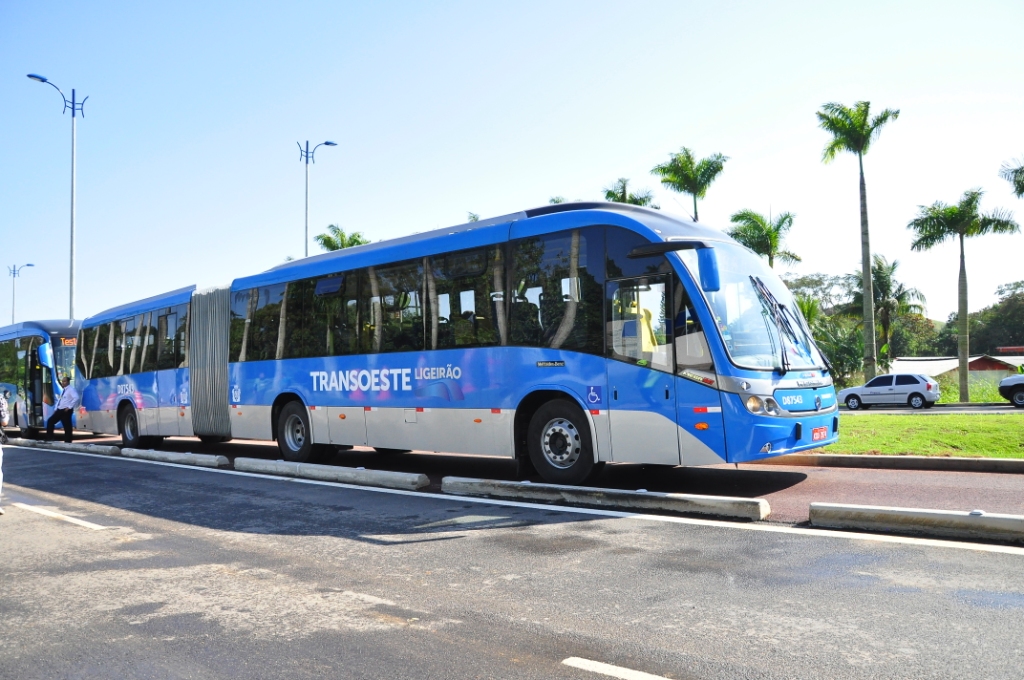
As world leaders gathered to address global sustainability at the Rio+20 Conference, the summit’s host city, Rio de Janeiro, just undertook its own green initiative— it launched its first bus rapid transit (BRT) corridor.
The lives of millions of cariocas, Rio de Janeiro residents, have already started to change with the opening of the Transoeste, the city’s first BRT corridor. The public transit system, developed with assistance from EMBARQ, expects to help hundreds of thousands of Rio residents, providing them with safer transport, shorter commutes, and less pollution.
“Today is a Great Day”
Mayor Eduardo Paes made the official announcement on June 6 at Pingo D’Água station in Guaratiba, West Zone, alongside former Brazilian president, Luis Inácio Lula da Silva, and Rio’s governor, Sergio Cabral. The director of EMBARQ Brazil, and member of our CoE, Luis Antonio Lindau, also took part in the event, strengthening the partnership between the organization and City Hall.
“Today is a great day,” said Lindau at the event. “Rio de Janeiro begins a new era of quality, efficiency and safety in Brazilian transit.”
EMBARQ Brazil, with support from Bloomberg Philantropies, has provided technical support to Rio’s City Hall through road safety audits, a crucial step to reduce the risk of traffic crashes on the corridor and to save lives. Partners also worked on several other actions to establish the first BRT in Rio.
The buses, nicknamed Ligeirões (meaning “super fast” in Portuguese) started to circulate on an experimental basis on June 6. During this first stage, which lasted until June 23, nine stations and 11 buses were operating off-peak, between 10:00 a.m. and 3:00 p.m. Other stations will gradually become operational.
Beginning in August 2013, when the system will become fully operational, the BRT will have an extension of 35 miles (56 kilometers) and 64 stations, with waiting times between buses of approximately one-and-a-half minutes. The system is estimated to benefit about 220,000 people each day, with most journeys being more comfortable and half as long as pre-BRT commute times.
Plans for the Future
Rio transporation officials plan on expanding the BRT system in the future, from one corridor to four. In total, 93 miles (150 kilometers) of BRT lanes will be built, changing mobility all over the Cidade Maravilhosa (Rio’s nickname, which means “wonderful city” in Portuguese).
«This is the first BRT, with others to come,” said Mayor Paes. “It is a cultural change around how people move about in the city. It’s like a subway train on wheels, at much lower costs.”
The four total corridors will include:
- Transoeste: An express bus corridor that will connect Barra da Tijuca to Santa Cruz and Campo Grande. The Transoeste will be 56 kilometers long and comprise 64 BRT stations. The average journey times are expected to be reduced by one-half on this lane. The first stage of the project is already operational on a trial basis and should be completed by August 2013.
- Transcarioca: The Transcarioca will be the first high-capacity corridor crossing the city transversally and connecting Barra da Tijuca to the international airport at Ilha do Governador on an exclusive, 24-mile (39 kilometer) lane. It is estimated that around 400,000 people will benefit daily from the system.
- Transolímpica: The 16-mile corridor (26 kilometers), connecting the neighborhoods of Deodoro and Barra da Tijuca via the Transolímpica, will be more than a way of shortening athletes’ journey times between the venues of the 2016 Olympic Games. Unlike the other three corridors under construction, this one will also be an expressway for cars, with no crossings or traffic lights, similar to Rio’s Linha Amarela.
- Transbrasil: This will be the fourth corridor to be built by Rio’s City Hall in time for the 2016 Olympic Games – 20 miles (32 kilometers) long and comprising 25 stations. This line will connect the Santos Dumont airport to Deodoro in the city’s West Zone, and will have the biggest demand of all, with 900,000 commuters per day. It will have connection points with the Transolímpica and the Transcarioca, as well as stations at Francisco Bicalho and Presidente Vargas avenues.
¿Comments? ¿Opinions? ¿Similar News? Send them to us!
Tweet
Event wrap up: 12 International Conference on Advanced Systems for Public Transport CASPT12
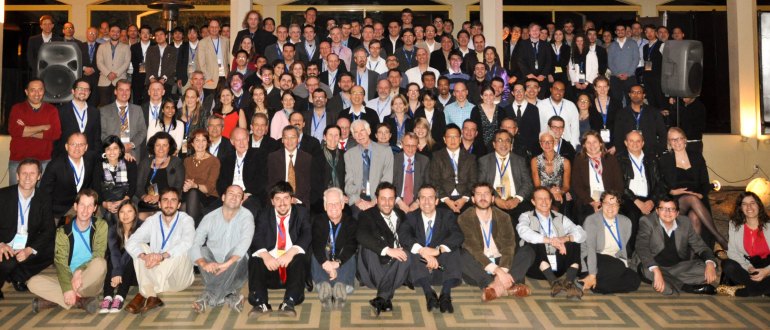
The twelfth version of the International Conference on Advanced Systems for Public Transport was held in Santiago, Chile from July 23 to July 27, 2012. This time the conference was organized by the Department of Transport Engineering and Logistics of the Pontificia Universidad Católica de Chile, with the support of the Bus Rapid Transit Centre of Excellence. This conference has become the most important in the field of design and operations of public transport systems. For the first time it was organized in the southern hemisphere and in a Latin American city.
For almost 40 years CASPT has served as a forum for the international community of researchers, practitioners and vendors involved on all aspects of public transport planning and operations (with similar emphasis in bus and rail based services). CASPT covers significant contributions to the theory and application of systems and methodologies for advancing public transport planning and operations. CASPT encourages not only the generation and presentation of new ideas, but also hopes to instigate productive collaborations between participants from academia, industry, and government.
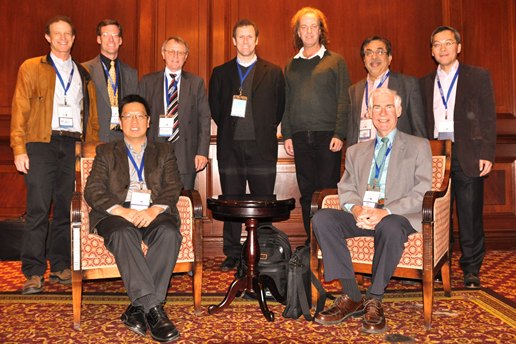 Traditionally, this conference attracts participants from many countries, most of them in North America or Europe. To increase its regional impact in South America, CASPT was organized in parallel to a meeting of the Latin American Association of Integrated Transit Systems and BRT (SIBRT) which guaranteed the participation of members of the most important transit agencies and operators of Latin America.
The call for extended abstracts received around 180 contributions. They came from over 30 countries from the 5 continents. By the end, 92 papers were presented, plus 7 plenary talks (3 by local authorities at the inauguration) and 15 talks at the SIBRT meetings. The following were the plenary talks:
- Urban Public Transport Policy in Chile – Pedro Pablo Errázuriz, Minister of Transports and Telecommunications of Chile
- Challenges of improving and expanding the Metro in Santiago, Chile – Roberto Bianchi, Chief Executive Officer Metro de Santiago
- Transantiago, a radical transformation: yesterday, today and tomorrow – Patricio Pérez, General Coordinator of Transantiago
- Urban Transport: A little less conversation, a little more action – David A. Hensher, Institute of Transport and Logistics Studies, The University of Sydney, Australia
- On Joint Rail and Property Development: Opportunities and Potential Pitfalls – Hong K. Lo, Hong Kong University of Science and Technology, China
- Traffic congestion in networks, and alleviating it with public transportation and pricing – Carlos Daganzo, University of California, Berkeley, USA
- Sustainable Transportation: Just a question of mode technology election? – Paulo Custodio, Private consultant, Brazil
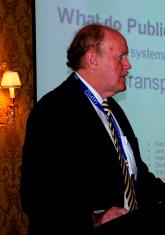
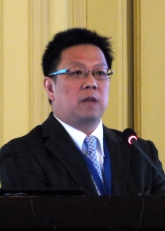
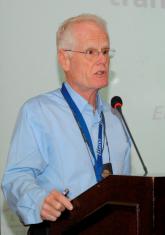
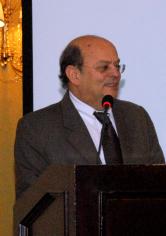
We had a bit over 250 attendants from 33 countries to the meeting (Australia, Brasil, Canada, Chile, China, Colombia, Denmark, Ecuador, Egypt, France, Germany, Hong Kong, Hungary, Iran, Ireland, Israel, Italy, Japan, Mexico, Netherlands, New Zealand, Peru, Portugal, Serbia, South Africa, Spain, Sweden, Switzerland, Taiwan, Turkey, UK, US and Uruguay) during the five days event, which included a Welcome Cocktail, a day trip to Casablanca Valley and Valparaíso, a Conference Dinner at the San Cristóbal hill and Technical visits in Santiago.
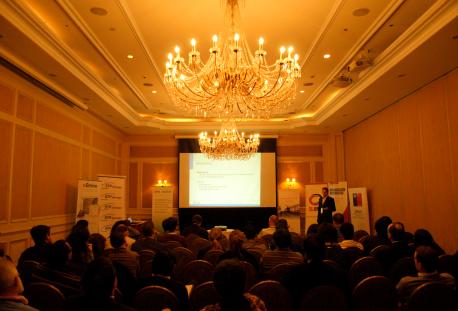
Additionally, the opportunity was taken for organizing a fair of software providers for managing, designing and control of public transport systems, as well as an open half-day Workshop between operators, academics, agencies and providers, where the firms had the opportunity to make a presentation about the products and services they offer. We had 7 firms presenting their products and services, and then a roundtable to discuss about them from a Latin American perspective. Around 60 people from firms, agencies, operators and academia attended it.
¿Comments? ¿Opinions? ¿Similar News? Send them to us!
Tweet
First SIBRT Service Quality and User Satisfaction Workshop
A Major Step in Latin America Towards High Quality Public Transportation for All
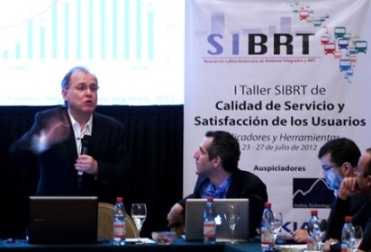
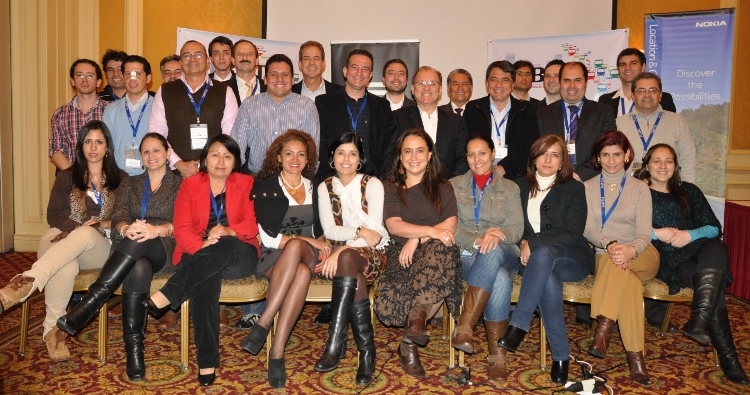
 The First SIBRT Service Quality and User Satisfaction Workshop, organized by SIBRT with the support of Transantiago, our ALC-BRT Centre of Excellence, and the EMBARQ Network, brought together more than 40 participants from 12 cities and six Latin-American countries to discuss how to offer high quality public transportation services and achieve user satisfaction. The event took place from July 23-27 in Santiago, Chile during the Conference on Advanced Systems for Public Transport, CASPT12.
The exchange of experiences is part of the growing and systematic benchmarking work underway by SIBRT, which was inspired by the precursory experiences of the Railway Technology Strategy Centre – RTSC of the Imperial College of London. This benchmarking work is being done in cooperation with our Centre of Excellence, which contributes scientific expertise to SIBRT. This cooperation was critical to ensure that the SIBRT Workshop in Santiago achieved world class quality.
“We need to recognize the contributions of visionary Professor Juan Carlos Muñoz, who leads the Center of Excellence, and the amazing work of his team of researcher from PUC Chile, and recognize the methodological guidance provided by Professor Luis Antonio Lindau, the President of EMBARQ Brazil, for opening a fruitful space for exchange and cooperation between the different actors that are responsible for providing quality public transportation services” asserted Luis Gutiérrez, Strategic Director for Latin America for the EMBARQ Network and General Secretary of SIBRT.
The discussions took place through SIBRT agency presentations and group dynamics covering each one of the three critical themes: managing user opinions, performance indicators and contractual mechanisms. The workshop permitted the agencies’ technical staff to learn about the point of view of the private operators from Colombia and Mexico and also from some transit suppliers, which added to the analysis that was being done in the small groups.
The work was led by André Jacobsen, SIBRT Benchmarking Expert, with the help of four professional facilitators that recorded all the ideas and suggestions expressed by the participants, so as to later synthesize all of the information and discussions from the workshop.
The closing session of CASPT12 served as another fruitful milestone for our work in Santiago. Public transportation supplies of planning, information, and management technology and software presented on their products to an audience of transit managers, operators, experts and consultants which led to a valuable and an acute discussion on the future of the industry and the services needed in the transit sector. SIBRT presented its vision on the modernization challenges facing public transportation providers in Latin America y the need to work together through strategic alliances. In this way, CASPT12 became a privileged setting for dialogue and cooperation between different transit sectors that had not come together in this format before. “We are very pleased with the work that occurred in this final meeting…Suppliers, managers, and operators were, for the first time, the protagonists of a process of exchanging experiences and concepts that were very constructive and creative, that we hope to see repeated in the future…Our Center will be ready to repeat this process as many times as is needed…”, said Juan Carlos Muñoz.
The knowledge gathered in the First SIBRT Service Quality and User Satisfaction Workshop will serve as the basis for the realization of a common strategic agenda. SIBRT, the Center of Excellence, and the EMBARQ Network have agreed to develop studies and guides of best practices that support all those involved in public transportation systems in Latin American cities so that they will have the opportunity to improve their capacity and implement services with the highest quality standards.
¿Comments? ¿Opinions? ¿Similar News? Send them to us!
Tweet
Traffic Safety on Bus Corridors: Pilot Version – Road Test
Source: EMBARQ
The purpose of this guidebook (launched a couple of months ago, as described here) is to provide bus agencies, local jurisdictions, as well as regional and international organizations with a set of suggested design, planning, and operational criteria that should be considered in the planning and design of new bus systems.
The information contained in these guidelines should by no means be used as standard details on which to base a final design, but rather as recommended criteria and general guidance which, in conjunction with engineering judgment and a thorough analysis of existing conditions on the corridors, should help develop final designs. Moreover, these are global guidelines representing general concepts and are not site or country specific, and they may not always be adapted to local design and signalization standards. The applicable local standards for signalization and markings should always be checked before applying the recommendations set forth in these guidelines.
EMBARQ will distribute the pilot version of the guidelines, available in English, Spanish, and Portuguese, to people involved in the planning and design of new bus corridors, including experts who work at multilateral development banks, government institutions, transit agencies, universities and transport consultancies.
To become involved in the “road test,” please contact EMBARQ Transportation Research Analyast Nicolae Duduta at nduduta@wri.org to receive a copy of the guidebook, as well as instructions on providing feedback.
Download full report:
English
Español
Português
¿Comments? ¿Opinions? ¿Similar News? Send them to us!
Tweet
The promise and challenges of integrating public transportation in Bogotá, Colombia
User perception of Bogotá’s integrated public transport system: trends and implications for program implementation
Several cities in the developing world are transforming decentralized bus transit services into integrated transit systems. These programs aspire to improve service quality and mitigate negative impacts, such as pollution and traffic injuries and deaths. However, implementation processes in Santiago, Chile and elsewhere have proven difficult. One contributing factor has been a lack of integration of community concerns in the planning process. In this paper, we provide a framework for direct identification of user needs and apply it to the ongoing process in Bogotá, Colombia. Bogotá is integrating its BRT system with reorganized bus services throughout the city. Using expert interviews and a semi-structured community survey, we identify awareness, expectations and aspiration gaps, as well as equity concerns. We also suggest specific actions to improve user information during system implementation. The methods developed for this research and understanding of Bogotá’s lessons are useful for improving planning and implementation of other large-scale transit integration processes.
Getting from A to B with less stress – David Hensher video
Source: What matters to you?
What matters to you? is a website developed by The University of Sydney, which publishes polls and compiles the opinions of the visitors who have chosen to participate in them.
One of the matters presented in June 2012 was «Getting from A to B with less stress», and a video with David Hensher was developed to address this matter. It is described as: David Hensher is developing ideas to improve public transport and reduce traffic congestion on our roads. In addition to the obvious environmental benefits, these changes will improve people’s lifestyles and productivity.
¿Comments? ¿Opinions? ¿Similar News? Send them to us!
Tweet
Express services for a bus corridor: A case study and some analytical insights
Embedding Risk Attitudes in a Scheduling Model: Application to the Study of Commuting Departure Time
In traditional travel time reliability valuation studies, the value of travel time savings and the value of travel time reliability (or reduced time variability) are estimated within a linear utility functional form, which assumes risk-neutral attitudes for decision makers. In this paper, we develop nonlinear scheduling models to address both risk attitude and preference in the context of a stated choice experiment of car commuters facing risky choices where the risk is associated with the trip time. We also investigate unobserved between-individual heterogeneity in time-related parameters and risk attitudes using a mixed multinomial logit model. The willingness-to-pay values for reducing the mean travel time and variability (earlier/later than the preferred arrival time) are also estimated within the nonlinear scheduling framework. The model is then used to estimate preferred departure times for commuters, assuming that random link capacities are the source of travel time variability. Results show that the more variable travel times are, the earlier commuters depart and that the nonlinear scheduling model predicts earlier optimal departure times than the linear scheduling model does. The application in this paper helps to bridge the gap between theory and practice.
Transporte Sustentável no Século Urbano
Access as a social good and as an economic good: is there a need of paradigm shift?
Funding and financing constraints in the aftermath of institutional design: a critical review
In the last years many countries started the reform of their legal and organizational frameworks for public transport, aiming to obtain better performances and improve the market shares of these services. Only a few cities succeeded in introducing effective change and overcome barriers to the reform process. Several background studies have exhaustively identified and assessed these barriers for different types of cities, but there is a deficit of analysis on the paths which were followed by those few cities which succeeded in the reform process.
In the background of this wave of reform is the evolution of urban areas that occurred in the last decades and changed patterns of mobility from a radial concentric shape towards a typical interaction spread across peri-urban areas and very often ignoring the city centre. This caused organized mobility services to extend beyond the administrative borders of the city and, consequently, the need to extend the scope of intervention of the mobility authority to all communities with a direct stake in the mobility system became more obvious, yet easier said than done.
The rationale behind this problem of extension of the scope of action and influence of the mobility system is relatively easy to understand but raises additional problems between that scope of action and the scope of intervention of the different institutions in charge of the several aspects of the system, such as territorial definition, financial autonomies, etc.
This paper aims to observe in a structured way the critical issues that surround this problem aiming to pursue in-depth research on institutional design and financing alternatives.