
Using Empirical Bayes to Estimate the Safety Impact of Transit Improvements in Latin America
UN-Habitat launches Global Report on Human Settlements 2013: Planning and Design for Sustainable Urban Mobility
UN-Habitat launched its biannual flagship report, the Global Report on Human Settlements 2013 – Planning and Design for Sustainable Urban Mobility at World Habitat Day, in Medellin, Colombia and London, U.K. (Please see downloadable version of the Abridged version and the Full-text of the report).
Juan Carlos Muñoz and Dario Hidalgo, members of our CoE, are co-authors of Chapter 3: Metro, Light Rail and BRT.
The report is significant because it brings together in a very comprehensive manner (300+ pages and over 30 case studies), what the current status of sustainable urban mobility is. The report unequivocally makes the message that sustainable transport is not about about avoiding the negative effects of transport such as air pollution, climate change, road safety or congestion but that sustainable transport is important first and foremost because of the enabling role it has for economic and social development.
BRT Design Workshop Gran Avenida Briefing Book
A first glimpse on policy packaging for implementation of BRT projects
Policy packaging (i.e. the combination of individual policies and measures in order to achieve a certain goal) is a common practice in urban mobility management used to create synergies between single policies or to mitigate negative effects of a given policy.
However this practice is filled with difficulties of different kinds, from conflicting measures in the same package to simply bad packaging design, disregarding synergetic effects that can be achieved with the simultaneous or synchronized adoption of more than one policy measure. This problem has long been identified and is especially intense in urban areas. However it has not yet been solved.
It is worth mentioning that there is a common perception by several authors that these difficulties are much related with the institutional design and legal framework which constitute an outset condition of the decision process. This perception will be only a departure hypothesis in our analysis, since the empirical work entailed in this research will be supported by a structured analysis of a large number of BRT implementation cases.
This work is part of a broader project about the complexity of policy design in urban mobility systems with the purpose of enhancing the adoption and implementation of BRT systems.
Expanding transportation planning capacity in cities of the global south: Public-private collaboration and conflict in Chile and Mexico
File
Evolution of public transportation public private partnerships in Latin America: The Role of BRT in Mexico City and Santiago de Chile
Evolution of public transportation public private partnerships in Latin America: The Role of BRT in Mexico City and Santiago de Chile
Fostering Bus Rapid Transit in Mexico City: A Sustainable Reform?
Event wrap up: Thredbo 13
The 13th International Conference on Competition and Ownership in Land Passenger Transport
15-19 September, 2013 / Oxford, UK
This conference reviews the latest international developments in competition and ownership in land passenger transport, with reference to key political, economic, social, technological, legal and environmental trends. The main emphasis is on public transport, but the role of reforms in road pricing and of other policy instruments to discourage car use as part of an integrated package to grow demand for public transport is also central to the conference.
Several members of the CoE participated in the event, that has a Workshop-based structure which “maximizes” interaction among participants. During the conference, the CoE run a workshop devoted to BRT, that provided an update on BRT systems around the world and considerations of related concepts such as Corridor Dedicated Transit. By the end of the Workshop, a plenary talk was giving summarizing the main discussion and findings. Below you can find the presentation of this plenary:
The following papers were presented by CoE members:
- Evolution of public transportation PPPs in Latin America: the role of BRT in Mexico City and Santiago de Chile. Onesimo Flores and Chris Zegras.
- Barriers to implementing BRT systems. Luis Antonio Lindau and Dario Hidalgo.
- Cost efficiency under negotiated performance-based contracts and benchmarking – are there gains through competitive tendering in the absence of an incumbent public monopolist? David A. Hensher.
- An automated data driven performance regime for operations management, planning, and control. Dominick Tribone, David Block-Schachter, John Attanucci and Nigel H.M. Wilson.
- Incentive schemes, provision of quality and monitoring: the case of the public transit system in Santiago de Chile. Patricia Galilea and Marco Batarce.
- Drivers of Bus Rapid Transit systems – influences on ridership and service frequency. David A. Hensher, Zheng Li and Corinne Mulley.
- BRT versus heavy rail in suburban Sydney: comparing successive iterations of a proposed heavy rail line project to the pre-existing BRT network. Geoffrey Clifton, Corinne Mulley and David A. Hensher.
- Comparative analysis of six Latin American transit systems. Juan Carlos Muñoz, Marco Batarce and Ignacia Torres.
- Policy packaging in BRT projects: a methodology for case study analysis. Luis N. Filipe and Rosário Macário.
- Public transport integration in Bogota and Cali, Colombia facing transition from semi-deregulated services to full regulation citywide. Dario Hidalgo.
- Transatiago, five years after its launch . Juan Carlos Muñoz, Marco Batarce, Dario Hidalgo.
- Revisiting regulatory reform for bus operations in Latin America. Laurel Paget-Seekins, Onesimo Flores Dewey and Juan Carlos Muñoz.
- Institutional analysis of urban public transport systems: the case of New York City. Maria Spandou and Rosário Macário.
- Open access for railways and transaction cost economics – Is the European approach appropriate for all of Australia’s train operations? Rico Merkert and David Hensher.
- Metrobuses in Sydney: how high capacity and high frequency services are benefiting the metropolitan fringe. Corinne Mulley and Chinh Ho.
- Exhaust emissions of transit buses: Brazil and India case studies. Erin Cooper, Magdala Arioli and Aileen Carrigan.
- Risk management in Public Private Partnerships: The case of the M4 tollroad in Australia. Demi Chung and David A. Hensher.
Burying the highway: the social valuation of community severance and amenity
Community severance (CS) refers to the separation of people from facilities, services, and social networks within a community, and/or people changing travel patterns due to the physical or psychological barriers created by transport corridors and their use. Separation of neighborhoods and reductions of accessibility are some of the main effects of CS. These costs lack […]
Before and after: video highlights advances in Rio de Janeiro’s TransCarioca bus rapid transit system
Source: The City Fix
In anticipation of the 2014 World Cup and 2016 Olympic Games in Brazil, host city Rio de Janeiro is hard at work expanding and improving its transportation infrastructure and urban environs for the influx of athletes, fans, and visitors.
Eager to showcase progress made in the transport sector, the Municipality of Rio de Janeiro and the Olympic City initiative recently released a video showing before and after footage of the development of the TransCarioca bus rapid transit (BRT) corridor, scheduled for completion in December of this year and set to begin operation in early 2014.
TransCarioca will be Rio’s first high-capacity BRT corridor serving a North-South axis, connecting Galeão International Airport, on Governor’s Island, with Barra da Tijuca — site of the 2016 Olympic Village — on a dedicated, 39-kilometer long corridor. In a leap for transport integration, the TransCarioca will connect BRT, subway, and train systems. Beyond the two international sporting events, it is estimated that approximately 400,000 people will benefit daily by the system, including commuters from the neighborhoods of Curicica, Taquara, Madureira, Vicente de Carvalho, and Vila da Penha.
The newest corridor will join Rio’s first BRT system, TransOeste, which opened in June 2012. TransOeste runs 56 kilometers along a roughly Northwest-Southeast axis, with 74 stations and intervals between buses averaging a minute and a half. In addition to TransCarioca and TransOeste, the city of Rio plans on seeing two additional BRT corridors to completion by the 2016 Olympics: TransOlímpica and TransBrasil, totaling 150 kilometers of exclusive lanes for high-capacity buses.
“In 40 years I have never seen so much change,” expressed Oscalina Santana da Silva, an elderly resident who lives along the corridor. When it opens early next year, the 73-year-old will no longer need to walk a long distance in soaring temperatures to catch two buses to reach his doctor’s office. The corridors represent a dramatic change in the daily commute experience of users, cutting travel times in half and offering a more comfortable urban mobility option for all.
To learn more, read the latest news, explore 360-degree views of project areas, and watch video updates, check out Rio de Janeiro’s interactive Olympic City website.
Tweet
Cost efficiency under negotiated performance-based contracts and benchmarking for urban bus contracts –are there any gains through competitive tendering in the absence of an incumbent public monopolist?
This paper uses data obtained from numerous sources in Australia to assess the extent to which negotiated performance-based contracts with actionable benchmarking can achieve as good as, or better, improvement in cost efficiency compared to competitive tendering when incumbents are not public operators. Stakeholders who promote the position that Government should choose to test the […]
Drivers of Bus Rapid Transit Systems – Influences on Ridership and Service Frequency
Towards a simplified performance-linked value for money model as a reference point for bus contract payments
The burgeoning commitment to contracting the delivery of bus services through competitive tendering or negotiated performance-based contracts has been accompanied by as many contract payments schemes as there are contracts. We are now well placed to design a simplified performance-linked payment (SPLP) model that can be used as a reference point to ensure value for money, given the accumulation of experiences throughout the world which have revealed substantive common elements in contracts. Whether the payment to the operator is framed as a payment per passenger or as a payment per service kilometre, the SPLP identifies efficient subsidy outcomes that are linked to a proxy indicator of net social benefit per dollar of subsidy. We illustrate how the SPLP model can be applied to obtain the gross (subsidy) cost per passenger (or per passenger km) from measures of gross cost efficiency and network effectiveness. This model can then be used as part of a benchmarking activity to identify reference value of money prospects in respect of passengers per $ subsidy outlay by adjusting for influences not under the control of the service provider. A single framework to identify contract payments to operators, and to assess (i.e., benchmark) operator performance on critical KPIs, is provided by internalising critical key performance indicators (KPIs) in the design of the SPLP. The proposed SPLP model is sufficiently general to be independent of the procurement method (competitive tendered or negotiated, for example) and of the treatment of revenue allocation (net or gross based contracts), with the additional advantage of being able to assess value for money for government.
Choosing Public Transport – Incorporating Richer Behavioural Elements in Modal Choice Models
The development of behaviourally richer representations of the role of well established and increasingly important influences on mode choice, such as trip time reliability and accounting for risk attitude and process rules, has moved forward at a fast pace in the context of automobile travel. In the public transport setting, such contributions have, with rare exception, not been considered. In this paper, we discuss and empirically illustrate the merits of advanced modelling developments aimed at improving our understanding of public transport choice, namely the inclusion of reliability in extended expected utility theoretic forms, to recognise risk attitude and perceptual conditioning, the consideration of passenger crowding and its inclusion in linear additive models; and the role of multiple heuristics in representing attribute processing as a way of conditioning modal choice. We illustrate the mechanics of introducing these behaviourally appealing extensions using a modal choice data set collected in Sydney.
Headway control with multiple bus services in the same corridor
BRT and BHLS Evolution Worldwide
El Sistema Integrado de Transporte Público de Bogotá – SITP
High Quality, Affordable, Integrated Transit Keys to Public Transport Success
Public transport integration in Bogotá and Cali, Colombia – facing transition from semi-deregulated services to full regulation citywide
Public transport reform in Latin America
Role of Transport in Transforming Cities
Tecnologías para Vehículos de Transporte Público
BRT and BHLS around the world: Explosive growth, large positive impacts and many issues outstanding
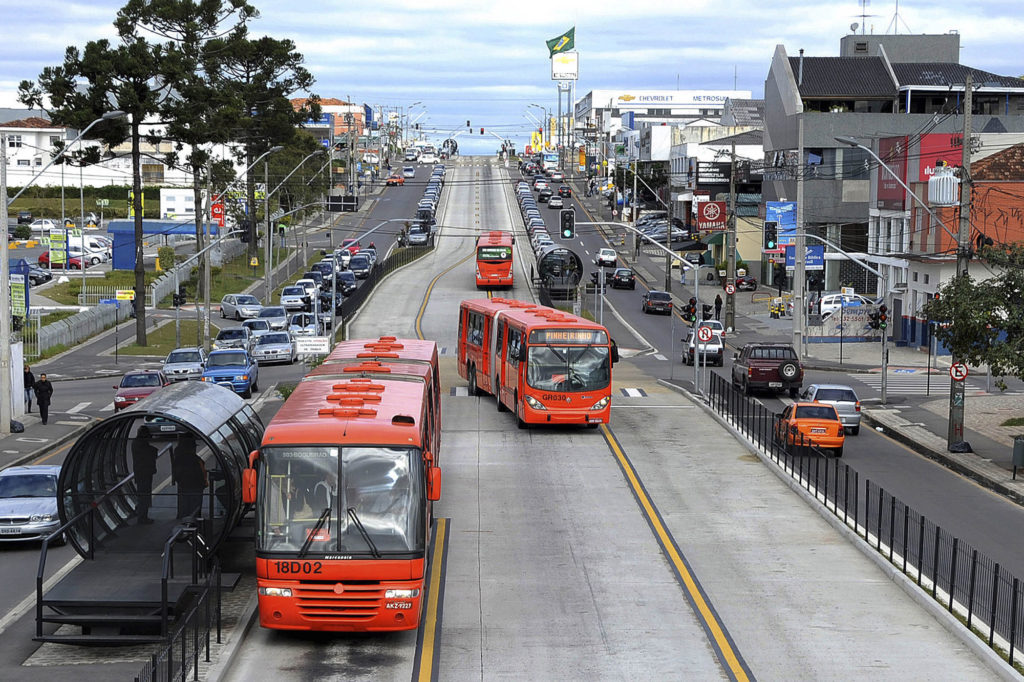
A survey of Bus Rapid Transit BRT and Bus of High Level of Service BHLS around the world indicates that there are about 120 cities with bus corridors, with 99 of the cities entering into the list in the last 12 years. The existing bus corridors comprise about 280 corridors, 4300 km, 6700 stations and use 30,000 buses, serving about 28 million passengers per day. In 2010–2011, 19 cities completed new systems − 16 in the developing world – and seven cities expanded their current systems. By late 2011, about 49 new cities were building systems, 16 cities were expanding their corridors, and 31 cities were in initial planning. This impressive growth may be attributed in part to the successes of Curitiba, Bogotá, México City, Istanbul, Ahmedabad and Guangzhou. These cities show low cost, rapid implementation and high performance BRTs, with significant positive externalities. Interesting trends are emerging, such as the implementation of citywide integrated bus systems, improved processes for private participation in operations, increased funding from national governments, and growth of bus manufacturers and technology providers. Despite the growth, there are some outstanding issues: BRT and BHLS do not have a single meaning and image and are often regarded as a “second best” as compared to rail alternatives. In addition several systems in the developing world suffer problems resulting from poor planning, implementation and operation, due to financial, institutional and regulatory constraints. The BRT and BHLS Industry are in their “infancy” and there is need for consolidation and concerted effort.
Implementation of sustainable urban transport in Latin America
Transportation provides vital support to the economic and social development of Latin America cities, but current growth patterns and trends are not sustainable. While non-motorized and public transport modes have the largest shares in passenger transport, there is a strong increase in ownership and use of cars and motorcycles. In Latin America in 2010 there were 2.5 new motor vehicle registrations for every new child being born.
Motorization results in congestion, air pollution, and greenhouse gas emissions. In addition, motorization increases the use of fossil fuels and results in reduction of physical activity, which in turn increases obesity and related illnesses. Costs of negative externalities are estimated to be around 18% of the average income of 15 selected cities in the region. There is a direct relation between fatalities and air pollution with automobile use, so curbing motorization might prove beneficial for the society at large.
There is considerable evidence from Latin America that it is possible to modify motorization trends. This can be done through reallocation of resources already dedicated to transportation to emphasize the provision of access for people and goods rather than maximizing transport activity. Mainstreaming sustainable transport will benefit from cooperation among countries – as it was agreed in the Bogotá Declaration (Foro de Transporte Sostenible de América Latina, 2011). It will also require improved information and institutions, and support from the international community, through focused financial instruments, development assistance and technical cooperation.
Metrobús Line 4, a medium level BRT concept for historic districts with advanced features
Methodology for calculating passenger capacity in bus rapid transit systems: Application to the TransMilenio system in Bogotá, Colombia
Transit textbooks and engineering manuals indicate that the capacity of Bus Rapid Transit –BRT – systems does not exceed 20,000 passengers per hour per direction. The implementation of the TransMilenio BRT System, in Bogotá, Colombia, showed that the systematic combination of multiple platforms at stations, overtaking lanes, level boarding, prepayment, large buses with multiple doors, express and local services, and traffic engineering measures at intersections, allow for very large passenger throughput. Measurements indicate actual throughput of 43,000 passengers per hour per direction with average bus occupancy of 150 passengers per articulated bus, and a commercial speed of 22–24 km/h. According to special formulas developed for the analysis of high capacity BRT corridors, the critical section of TransMilenio has a practical capacity of 48,000 passengers per hour per direction with its existing infrastructure and 150 passengers per bus – 35,000 passengers per hour per direction with 110 passengers per bus. Changes in existing infrastructure, such as additional platforms, higher capacity vehicles, non-grade facilities at critical intersections, among other improvements, may increase the capacity, speed, reliability and quality of service of the system.
Metro, Light Rail and BRT
Towards People’s Cities through Land Use and Transport Integration: Review of India’s National Urban Investment Program
Between 2005 and 2012, India’s Jawaharlal Nehru National Urban Renewal Mission (JnNURM) has invested US$20 billion in urban infrastructure and basic services to the urban poor. The transport program under JnNURM is a very important advance, as it helps the cities with policies and funding for moving people, not vehicles. Nevertheless, it has not sufficiently shifted investment in the urban transport sector from road widening and road expansion to sustainable transport. Based on interviews with several stakeholders, a literature review on JnNURM, and consideration of the urban characteristics and transport needs of Indian cities, the authors suggest key improvements in Indian urban transport policy: i) Reinforce the link between land use and transport in the urban transport policy vision. This will allow the preservation of “people’s cities” in the existing urban areas and development of new accessible, dense and mixed used developments around the existing cities; ii) Advance the preparation and implementation of the Comprehensive Mobility Plans (CMPs), in close connection with the Master Plans and JnNURM budget allocations, to transform them from simple lists of projects and good will, to effective planning and monitoring instruments; iii) Introduce performance measurement of key transport indicators at the city wide level: people served, modal share, travel time, traffic fatalities and transport tailpipe emissions; and iv) Develop capacity building programs for project planning and delivery at the city level and for evaluation and monitoring at the state and national level. The recommendations for India are applicable to other rapidly urbanizing and motorizing countries. The authors do not claim that road expansion is not needed, but that it should not be the only focus of public investments in the transport sector.
TransMilenio BRT system in Bogota, high performance and positive impact – Main results of an ex-post evaluation