Opinion Pieces: The Data Trail – Keep it Simple but make it Meaningful
Opinion Pieces: since 2007, Prof. David Hensher has written an opinion column in the Australasian Bus and Coach magazine, where he monthly discusses a lot of different transport-related hot topics. In this section we are revisiting these columns.
October 2007
My recent participation in a number of inquiries into ways to improve the efficiency and effectiveness of public transport has highlighted the inadequate focus on really knowing what does make a difference to actual and potential users of public transport. There appear to be a large number of customer satisfaction surveys which seem on balance to focus mainly on looking at how satisfied (happy?) existing users are with a range of existing service attributes. There is something missing – someone may be eternally satisfied with a specific feature of a service (e.g., the attitude of the bus driver or the inspector on the train or the attendant at the Ferry wharf), but is that really so important as to influence whether someone would choose to use or not use a bus or train or ferry? An obvious and simple improvement would be to identify how important specific service features are in one’s choice of means of transport and how well is the operator performing in providing the service in terms of that feature. As an example, we might think about asking how does the stakeholders’ perception of how successful the operator has been in addressing each of the issues compare with their perception of how important each of the issues are? To determine this, a simple “difference score” might be used, defined as the difference between the importance and success ratings given by each respondent to each issue as shown in the Table below.
Levels of Difference Scores |
||||
How Important Scale |
How Successful Scale |
|||
1 |
2 |
3 |
4 |
|
1 |
0 | -1 | -2 | -3 |
2 |
1 | 0 | -1 | -2 |
3 |
2 | 1 | 0 | -1 |
4 |
3 | 2 | 1 | 0 |
A positive score indicates that the success in addressing an issue is lagging behind its importance in choosing a means of transport. Its magnitude is indicative of how much success is lagging behind importance. For example, the score “3” is obtained when the stakeholder considers an issue to be very important but the same issue has been unsuccessfully addressed by the Operator. A negative score indicates that the Operator has over addressed an issue given its importance to actual and potential passengers. For example, the score “-3” indicates that a stakeholder considers an issue to be unimportant even though it has been very successfully addressed by the Operator. A zero score indicates that the Operator has addressed the issue in line with its importance.
Given the growing importance of measuring the passenger’s (existing and potential) assessment of the effectiveness of public transport services, it is timely that we at least ask the question: Do we Really Know our Passengers? Are we measuring incorrectly if we want to grow patronage? Information is only relevant if it is useful.
¿Comments? ¿Opinions? ¿Similar News? Send them to us!
BRT in Ahmedabad: Lessons From a State-of-the-Art Bus System

EMBARQ’s The City Fix had the chance to spoke with Professor Shivanand Swamy, the Associate Director of CEPT, about Ahmedabad’s Janmarg bus rapid transit (BRT) system one year after its creation. The new BRT system, considered a best practice for BRT in South Asia, provides services of about 90,000 bus trips per day on 45 buses.
Read full article at The City Fix.
Photo: CEPT University
¿Comments? ¿Opinions? ¿Similar News? Send them to us!
Check our Transantiago videos in YouTube

These videos are a description of the motivation, design, implementation and first year evolution of Transantiago System, in Santiago, Chile. They were developed during the International Workshop on BRT held in Santiago on 26-29 August, 2008. Don’t forget to activate the English captions by clicking «CC» at the bottom of the video.
Photo: Transantiago
¿Comments? ¿Opinions? ¿Similar News? Send them to us!
Interview to Professor Juan de Dios Ortuzar during his stay in The University of Western Australia

During July 2010, Professor Ortuzar lived in Perth, where he was the Westnet Infrastructure Group Visiting Professor at The University of Western Australia Business School. He was interviewed about his research and his work in Perth.
Read full interview in The University of Western Australia’s website.
¿Comments? ¿Opinions? ¿Similar News? Send them to us!
Guadalajara decides to cancel their BRT project: controversy in Mexico
Mayors just rejected federal funding for line 2 of Guadalajara’s BRT. Their decision is allegedly based on technical studies showing that LRT is a better option – full press conference article (in Spanish).
In response, the Governor of Jalisco slams them for «sending the jobs and federal money to Monterrey» – full press release (in Spanish).
Bunch of links on the polemic (in Spanish): informador.com.mx
¿Comments? ¿Opinions? ¿Similar News? Send them to us!
The ALC-BRT CoE has been awarded a five-year grant from the Volvo Research and Education Foundation (VREF)
Read full article in VREF’s website.
¿Comments? ¿Opinions? ¿Similar News? Send them to us!
Special Issue of Research in Transportation Economics edited by Rosário Macário
Research in Transportation Economics is a journal devoted to the dissemination of high quality economics research in the field of transportation. The content covers a wide variety of topics relating to the economics aspects of transportation, government regulatory policies regarding transportation, and issues of concern to transportation industry planners. The unifying theme throughout the papers is the application of economic theory and/or applied economic methodologies to transportation questions.
In this special edition Volume 30, Issue 1, Pages 1-154 (2010) ECONOMICS OF CONTRACTUAL RELATIONSHIPS IN THE PROVISION OF TRANSPORT INFRASTRUCTURE, edited by Rosário Macário, you can find the following articles from members of our Centre of Excellence:
Galilea, P. and Medda, F. (2010) Does the political and economic context influence the success of a transport project? An analysis of transport public-private partnerships. Research in Transportation Economics 30, 102-109.
Macário, R. (2010) Critical issues in the design of contractual relations for transport infrastructure development. Research in Transportation Economics 30, 1-5.
Macário, R. (2010) Future challenges for transport infrastructure pricing in PPP arrangements. Research in Transportation Economics 30, 145-154.
Viegas, J.M. (2010) Questioning the need for full amortization in PPP contracts for transport infrastructure. Research in Transportation Economics 30, 139-144.
Photo: Metro de Santiago
¿Comments? ¿Opinions? ¿Similar News? Send them to us!
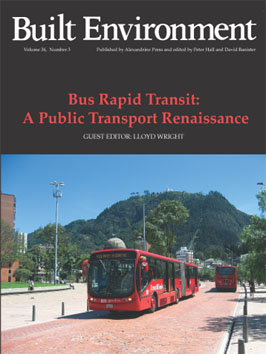
BRT special edition of Built Environment
«Bus Rapid Transit: A Public Transport Renaissance» is a special issue of Built Environment (Volume 36, number 3, edited by Professor Sir Peter Hall and Professor David Banister, guest editor: Lloyd Wright, Viva) that traces both the history of and the current trends in BRT across the globe, providing a regional perspective on progress and challenges.
The following papers from members of our CoE are included in this publication:
Curitiba, the Cradle of Bus Rapid Transit
Authors: Luis Antonio Lindau, Dario Hidalgo and Daniela Facchini
Page start: 274
BRT in Latin America – High Capacity and Performance, Rapid Implementation and Low Cost
Authors: Dario Hidalgo and Aileen Carrigan
Page start: 283
More info: Promotional flyer and oficial website
¿Comments? ¿Opinions? ¿Similar News? Send them to us!
Our first appearences on the World Wide Web

During April, 2010, our Centre of Excellence was all over the World Wide Web!
Please check the following articles regarding our CoE’s establishment:
ALC-BRT CoE in PUC’s website (in Spanish)
ALC-BRT CoE in World Resources Institute’s website
ALC-BRT CoE in EMBARQ’s website
ALC-BRT CoE in MIT Portugal website
ALC-BRT CoE in MIT News website
¿Comments? ¿Opinions? ¿Similar News? Send them to us!
Welcome to our brand new website!
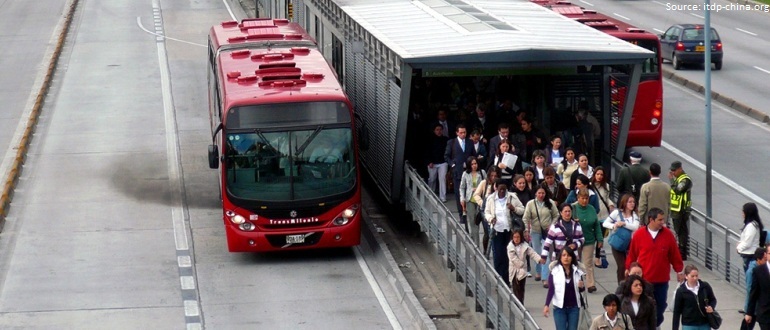
We are very pleased to launch the website for our Across Latitudes and Cultures – Bus Rapid Transit Centre of Excellence. We expect it to be a main tool to communicate our findings and inform about educational opportunities, but also to show what other actors worldwide are doing regarding BRT projects.
The main goal of this Centre of Excellence will be to develop a new framework for the planning, design, financing, implementation and operation of BRT in different urban areas, giving clear guidelines to decision makers on when and how BRT projects can effectively enhance mobility and meet accessibility needs. We expect these guidelines to be a major milestone to change the way decision makers address investment and design decisions in configuring urban mobility systems. An essential goal is to make the knowledge developed through the CoE widely available to support more successful BRT deployment, and in particular to identify elements which are transferable between existing and prospective BRT systems and elements that are project site specific. Our focus will not only be at the BRT project level, but also on how BRT projects interact with other elements of the urban system so that the total urban mobility system is transformed and the city becomes a more attractive place to live, work and visit. The proposed approach recognizes that, while integrated networks and not just corridors must be the focus, corridors are a structural element to the connectivity and effectiveness of hierarchical networks. We expect this website to be the main communication driver in this effort.
Even though we do not see ourselves as a BRT-Advocay Agency, we are convinced that the BRT concept is powerful and flexible, and capable of fitting into quite different realities and diverse social and land-use environments. Our Centre is formed by members with quite different backgrounds from 5 institutions of different corners of the world. We expect to capture the full breadth of situations, challenges and responses that BRT systems face worldwide. We feel very challenged for the opportunity of creating a Centre that could act as a nucleus on Bus Rapid Transit for public tranport researchers and practitioners.
Our CoE will build on three main foundations:
- Social and technical research, providing rigour and depth in problem formulation, analysis and evaluation.
- First hand empirical experience in the planning, design, finance, implementation and operation of BRT systems, providing a “feet on the ground, results oriented” approach.
- Political and policy analysis, providing vision and experience about the challenges of implementing BRT systems in real settings.
Our CoE will provide four major outcomes, each producing several deliverables:
- A BRT Observatory, that will gather, interpret and present data on real cases of BRT implementation, or preparation for such implementation, in the form of case studies.
- A BRT Laboratory, that will develop in-depth understanding of the factors and relations underlying system performance, be it on the physical, financial, institutional or other dimensions, developing or improving analytical methods and their supporting instruments.
- A BRT Educational program, that will deploy the knowledge gained from the Observatory and Laboratory in such a way that it generates added value to the real world of practitioners as well as didactic materials to support teaching, education and training for regular and long-life learning.
- Support in BRT Implementation and Dissemination through the world wide work of the different CoE partners and associated institutional networks.
We think that this Centre will be a quite unique opportunity not only to develop research that will stand at the border of our knowledge, but also to influence with our findings how cities are developed. This Centre will not be successful if it doesn’t get this last mile and reach some decision makers around the globe.
Juan Carlos Muñoz
Director
Across Latitudes and Cultures – Bus Rapid Transit Centre of Excellence (ALC-BRT CoE)
Mariana Barcelos

New World Bank Report. Challenges to Inclusive Bus Rapid Transit
The World Bank recently published a report, “Technical and Operational Challenges to Inclusive Bus Rapid Transit,” compiled by Tom Rickert, a consultant with extensive experience on accessible transportation. While the technical report is intended primarily for an audience of BRT system and service planners, its release marks a recognition of the practical challenges in making public transport in the developing world fully accessible.
Read full article in World Streets
¿Comments? ¿Opinions? ¿Similar News? Send them to us!
Implementing BRT: From Vision to Reality
Ignacia Torres

Does the political and economic context influence the success of a transport project? An analysis of transport public-private partnerships
The construction and provision of infrastructure services such as transport nowadays is often based on a partnership between three main actors: public sector, private sector and multilateral lenders, under a framework of Public–Private Partnerships (PPPs). This type of partnership has been employed in a wide range of projects in the transport sector and in various contexts in developing and developed countries. Given this observation, the objective of this paper is to examine how countries’ economic and political characteristics contribute to the success of PPPs in transport investments. Special focus in the analysis is given to how the perception of corruption and democratic accountability may influence the success of a PPP project in different transport sectors. We examine a database with 856 transport PPP projects using a generalized linear model in the form of a logit model in order to evaluate the transport database covering data from 72 countries, classified in six regions. The study highlights the importance of national experience. Not only does national macroeconomic experience appear to have a relevant role, but so also does its past experience (either positive or negative) of transport PPP projects. An interesting finding from the analysis is the importance of the rest of the world’s perception of a country’s level of corruption and democratic accountability for the final outcome of a PPP project.
Incompleteness and clarity in bus contracts: identifying the nature of the ex ante and ex post perceptual divide
In the transport sector, many types of contracts exist. Some are very precise, and strive for completeness; others are very ‘light-weight’ and are incomplete. Bus and coach contracts, won through competitive tendering or negotiation, are typically incomplete in the sense of an inability to verify all the relevant obligations, as articulated through a set of deliverables. This paper draws on recent experiences in contract negotiation, and subsequent commitment in the bus sector, to identify what elements of the contracting regime have exposed ambiguity and significant gaps in what the principal expected, and what the agent believed they were obliged to deliver. We develop a series of regression models to investigate the extent of discrepancy between the principal and the agents perceived ‘understanding’ of contract obligations. The empirical evidence, from a sample of bus operators, is used to identify the extent of perceived incompleteness and clarity across a sample of bus contracts. A noteworthy finding is the important role that a trusting partnership plays in reducing the barriers to establishing greater clarity of contract specification and obligations, and in recognition of the degree of contract completeness.
The dimensionality of performance frameworks and performance measurement for bus rapid transit systems
Fundamental to all good business practices in the delivery of public transport is knowledge of how well the enterprise is performing, especially relative to other enterprises undertaking similar activities, as well as self performance over time. A commitment to performance management and benchmarking should transcend all institutional settings, be they subject to competitive tendering or negotiated contracting, and in the presence or absence of specific incentives and sanctions. This paper focuses on the development of a framework within which performance metrics can be defined and introduced in the context of meeting strategic, tactical and operational objectives in the public transport sector. We discuss the important matters of definition of performance, data requirements, standards, the hierarchy of integrated partial and global measures of performance and frameworks to compare enterprises, and to explain why there are differences, and what actions might contribute to closing the gap between relatively poor and better overall performance. The relationship between inputs, outputs and outcomes is central to the performance rubric, as well as an understanding of the processes that underlie the mappings between these three dimensions. An important aim of the paper is to ensure that the data collection activity planned for a global study of the performance of Bus Rapid Transit (BRT) systems is guided by an integrated and comprehensive framework for performance management, measurement, feedback, and improvement.
Passenger experience with quality-enhanced bus service: the tyne and wear ‘superoute’ services
This paper investigates the role that enhanced service quality introduced into a deregulated market has in improving the experience of bus travel by a sample of passengers in the Tyne and Wear area of England. A generalised ordered choice (GOC) model that accounts for preference heterogeneity through random parameters, as well as heteroscedasticity in unobserved variance, and random parameterisation of thresholds, is implemented to identify sources of influence on the overall experience of bus travel in the presence and absence of the quality-enhanced treatment of service. The GOC model is contrasted with a standard ordered logit model, and the marginal effects associated with the preferred GOC model are derived for each influencing attribute, taking into account the various ways in which each influence contributes to the utility associated with each level of bus experience. The paper supports a view that the introduction of quality improvements, via a Quality Bus Partnership, does contribute non-marginally to an increase in a positive bus experience, and signals a way forward through cooperative intervention, to grow patronage. Knowing which attributes successfully deliver a more positive experience (and those that do not) means that resources are effectively targeted at the aspect of service provision which will increase patronage and therefore revenues, satisfying the objectives of both the bus operator and the local authority partner.
Contracting regimes for bus services: What have we learnt after 20 years?
This paper reviews a number of themes that have played a crucial role in the debate on alternative contracting regimes for the provision of urban bus services. We have selected four crucial issues to reflect on: (i) contractual regimes (in particular competitive tendering as compared to negotiated performance-based contracts, as means to award the rights to provide service); (ii) contract completeness (focussing on ex ante and ex post elements); (iii) building trust through partnership; and (iv) tactical or system level planning for bus services. Experience in these areas suggests that competitive tendering has frequently not lived up to expectations and that negotiation is likely in many circumstances to deliver better value for money.
Scoping post 2012 climate instruments: nationally appropriate mitigation actions – NAMAs – Case Study on opportunities in Brazilian Cities – Belo Horizonte
BRT in Latin America – High capacity and performance, rapid implementation, low cost
Sixteen Latin American cities have embraced Bus Rapid Transit as a key component of their transit systems. BRT was already operational in several Latin American cities, before the acronym was coined by transit planners in the US in the late 1990s. This review concentrates on nine cities, and shows the systems’ high performance (5,000 – 43,000 passengers/hour/direction), general high user acceptance, comparatively low capital investment (US$ 1.0 million/km to US$ 12.5 million/km) and little or no operational subsidies. BRT has been a key element in transit reform, changing the way service is delivered. The systems have reduced travel time, transport cost, air pollution and greenhouse gas emissions, and accidents. Some cities have also experienced significant positive impacts in the built environment. BRT systems’ expansion is underway in most cities, and several additional Latin American cities have implemented or are in the process of implementing BRT systems. The cities have also faced some system implementation and operational difficulties due to institutional and financial constraints.
Global perspectives in developing countries
Movilidad Amable – Buses
Modernizing Public Transport: Lessons Learned from Major Bus Improvements in Latin America and Asia
Capacidad en sistemas de transporte masivo en buses – desarrollo de fórmulas y aplicación al caso de TransMilenio de Bogotá
Evaluation of the Delhi bus corridor: lessons learnt and recommendations for improvement
Bus rapid transit (BRT) has extensive applications in South and North America, Europe and the Far East, but it is a novel concept for South Asia. One of the initial projects in India, the Delhi Bus Corridor, has been controversial: media outlets highlighted problems for the general traffic and safety, while user surveys showed improved perception by bus users, bicyclists and pedestrians. The discussion of the benefits and problems of the corridor has been mostly based in perceptions and prejudices. The authors conducted an independent evaluation to contribute with technical arguments to this discussion and to provide suggestions for the corridor improvement. The results were also intended to contribute to the understanding of the BRT concept in the Indian context. The authors conclude that the Delhi bus corridor has improved people mobility along the initial stretch, but requires significant performance, safety and overall quality enhancements. The project only comprised major changes in infrastructure but lacked of integrated implementation of service plans, technologies and operations. User and community education was also insufficient. In addition to ongoing improvements, the authors identified the need to: i) establish a quality improvement program measuring the system performance, ii) focus on improving reliability and comfort; and iii) reevaluate the bus service plans to provide a better match of the supply and demand. The authors also recommend using median bus lanes with strong segregation as the preferred option for bus priority in Delhi. The bus corridor in Delhi provides invaluable experience for the enhancement of transit facilities and services in India and beyond.
TransMilenio de Bogotá, un sistema de alto desempeño e impacto positivo – principales resultados de evaluación ex-post de las fases I y II
The macrobus system of Guadalajara, Mexico: an evolved concept in BRT planning and implementation for medium capacity corridors
Bus Rapid Transit (BRT) is rapidly growing as an effective alternative for medium and high capacity corridors in developing countries. The Guadalajara BRT system represents an important reference for transit professionals considering low cost, rapid implementation, high impact transit alternatives. The initial 16 km line in Calzada Independencia, started operations on March 2009 and has received high ratings by the users. It includes 27 stations, 41 articulated buses and 103 feeder buses. The system operates at a high frequency with a relatively high commercial speed of 21 km/hr. It carries 127,000 passengers/day and 5,000 passengers per hour in the peak load section. Total capital investment was USD 61 million (USD 3.8 million/km). The BRT corridor positively compares with rail alternatives. The authors evaluated both the characteristics and the performance of the system as compared with high-end BRT paradigms. The corridor meets most of the high-end BRT components. Nevertheless, it did not start with all the elements in place. The corridor has also achieved important advances in performance. There is a need to continuously report performance indicators, mainly user perception, reliability, and comfort, so management actions for continuous improvement can be taken. The project was possible due to the strong political leadership; the support of a knowledgeable technical advisory team with international practical experience; adequate level of funding for planning and implementation; and a systematic approach that combines infrastructure, vehicles, operations and technology.
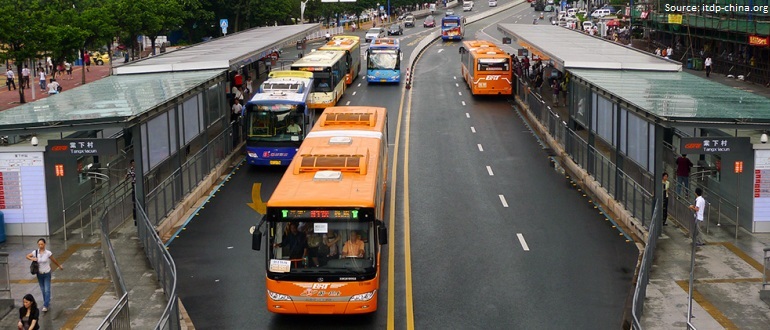
Passengers benefit from level-boarding platforms on Indore's BRT
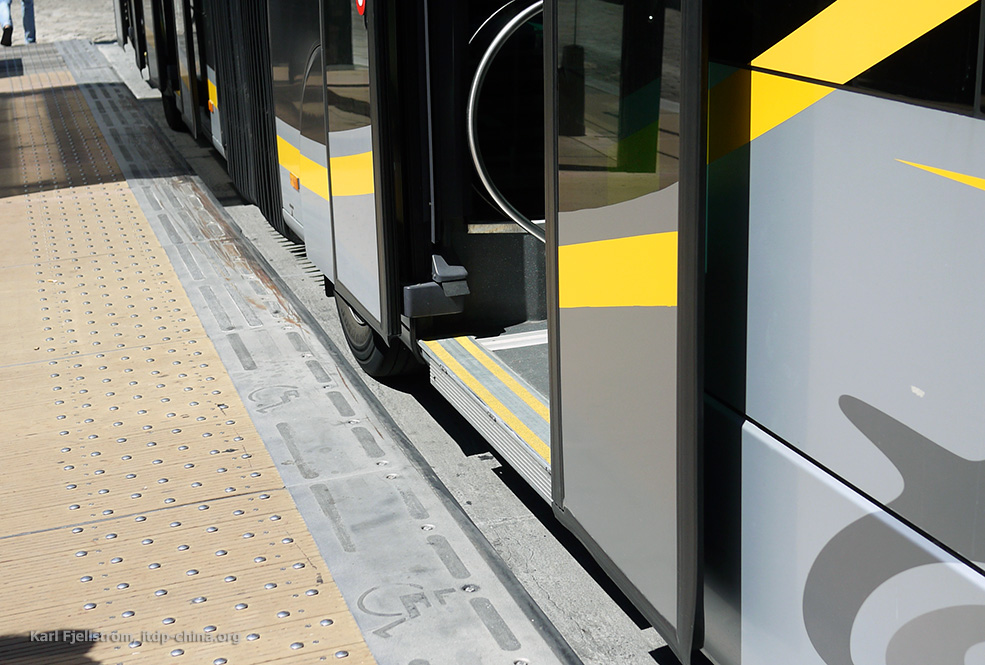
Passengers riding Indore’s bus rapid transit (BRT) system will spend less time boarding and exiting buses, reducing overall travel delays, thanks to a decision to configure stations with level-boarding platforms. The new design will also provide greater accessibility to the elderly, visually impaired and physically challenged commuters.
EMBARQ India, under the leadership of Director Madhav Pai and Urban Planner Prajna Rao, influenced Atal Indore City Transport Services Limited (AICTSL) to make the decision, which was announced at a recent AICSTL board meeting, led by AICTSL CEO Vivek Shrotriya.
Read full article in EMBARQ’s website.
Photo: itdp-china.org
¿Comments? ¿Opinions? ¿Similar News? Send them to us!
How to Attract and Engage Public Transport Users in Mexico
Innovative communications and marketing campaigns increase ridership and improve user perception, according to the workshop “How do we attract and win over public transportation users?». About 90 transport officials from 30 cities across Mexico attended the first-of-its-kind forum on June 28-29 in Mexico City, organized and hosted by CTS-México with support from FedEx Corp. The theme revolved around addressing the needs of daily transport users, who are the most important stakeholders in any transit system.
Read full article in EMBARQ’s website
¿Comments? ¿Opinions? ¿Similar News? Send them to us!