Interview to David Hensher and Corinne Mulley: Public transport innovations offer a way out of the jam
Source: The University of Sydney News
It’s a familiar sight: roads packed to the horizon with cars barely moving at all. Whether in Sydney, Lisbon or Chile, traffic jams are part and parcel of urban life.
But now there may be an alternative, with new research in efficient and sustainable public transport being conducted by David Hensher and Corinne Mulley at the University’s Institute of Transport and Logistics Studies.
As part the network Across Latitudes and Cultures – Bus Rapid Transit (ALC-BRT), Professor Hensher and Professor Mulley are collaborating with partners from Chile, Portugal, Brazil and America.
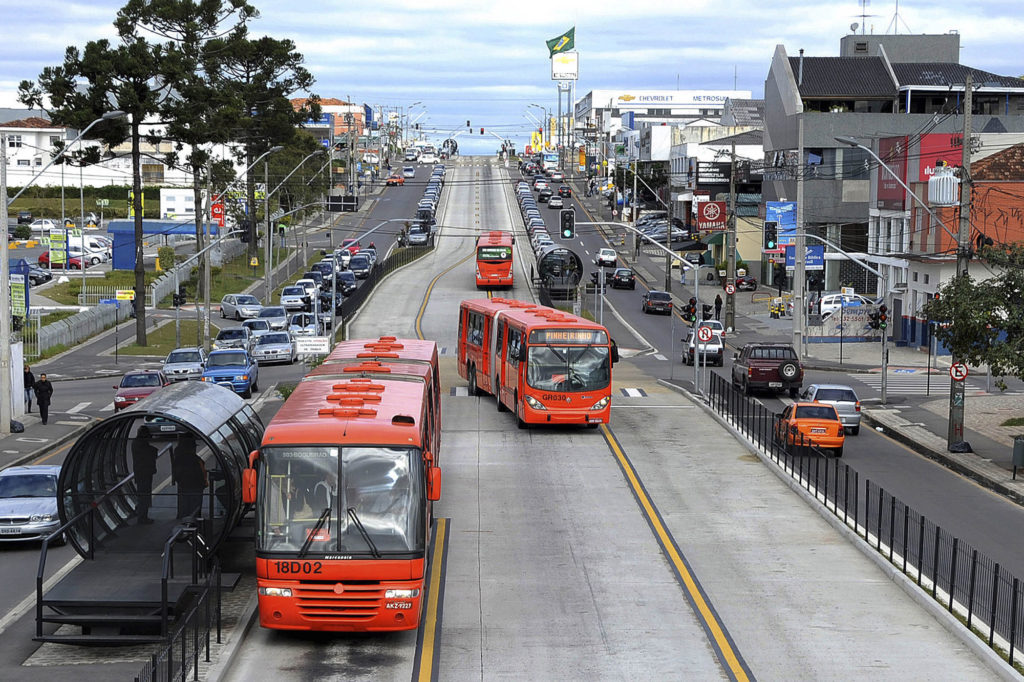
Bus rapid transit (BRT) is a system of enhanced bus services that combines dedicated bus lanes with quality bus stations. With faster delivery and greater network coverage than rail-based transport for the equivalent financial outlay, BRT offers a sustainable solution to public transport, especially in developing countries.
In South American countries, where levels of car ownership are significantly lower than in Australia, BRT has proven popular with commuters who depend on public transport to get to work. Professor Hensher and Professor Mulley’s work in South America includes delivering workshops to ensure successful BRT implementation.
Professor Mulley says: «In the lead-up to the Olympic Games in Brazil, new BRT infrastructure has been hugely successful as it offers more reach and coverage than rail-based transport.»
Despite the success of BRT in other parts of the world, Australian cities have not warmed to it. Professor Mulley says: «There’s a common perception that light rail is better on emissions than buses, but new buses can actually be zero emission vehicles.»
Professor Hensher adds: «Our research shows that the public perceive BRT as offering much better network coverage than rail based systems.»
Professor Mulley says: «With Australia’s comparatively low-density territory and high rates of car use, we don’t get to see BRT at its best. However, BRT forms the backbone of public transport routes in places like Sydney’s M2 corridor and in Brisbane, where there is more than one bus every two minutes. The success of BRT means that we could possibly implement better public transport in areas like Sydney’s northern beaches.»
Tweet
The Metro Bus System comes to Lahore, Pakistan
Source: The City Fix
[caption width="500" align="alignleft"] Photo by Star240[/caption]
This year we celebrate a positive development coming out of Pakistan, overlooked by mainstream news: an advanced bus system in Lahore, Pakistan’s second largest city. In years past, Lahore, capital of Pakistan’s eastern province of Punjab, was a city where urban public transportation was virtually unknown. For the more than 11 million residents and commuters of the Lahore urban area, the only transportation options were motorized rickshaws, private buses, minibuses, or taxis.
On February 11, 2013, Lahore began operating Pakistan’s first Bus Rapid Transit or BRT system, officially known in the city as the Metro Bus System (MBS). A catalyst in the development of urban transport in Pakistan, as well as in South Asia, the new Lahore Metro Bus System continues the deployment of advanced bus systems in South Asia, first pioneered in cities like Jakarta, Indonesia and Bangkok, Thailand. The advanced bus system in Lahore exemplifies how knowledge sharing positively impacts urban transport.
Lahore before: a densely populated area without solid public transport
Prior to the installation of Lahore Metro Bus System, the densely populated metropolitan area of Lahore, growing in population at a rate of 3% per year, was without a solid public transport option. In the last decade and in the same region of the world, less than 600 miles away, the city of Ahmedabad, India, was already at work on establishing their own sustainable transport system. The implementation of the Ahmedabad Bus Rapid Transit System (BRT) in 2009 would then further accelerate the spread of advanced bus systems in Asia.
Lahore after Metro Bus and beyond
Opponents to the Lahore Metro Bus System originally estimated the cost of construction at RS 70-80 billion (US$ 713-815 million) and used this figure to criticize the plan to build an advanced bus system. About a year after construction began, the system has launched, and the economic reality of Lahore’s bus system is much different than what naysayers projected. The finance minister for the Punjab Region, Shahbaz Sharif, announced at the opening ceremony of MBS that the actual system cost of came to RS 29.8 billion (US$ 303.6 million), significantly lower than original estimates.
Launched on February 11, 2013, the bus system spans a 27 kilometer-long corridor linking the suburbs of Gajju Matah and Shahdra to the main city center of Lahore. A fleet of 45 articulated buses (each 18 meters long) transport up to 12,000 passengers per hour, from 27 stations on the route. With the first month of ride fare waived as a promotion, citizens lined the corridor on the opening day, in an atmosphere of celebration and fanfare. Dignitaries and officials from Metro Bus System boarded for an inaugural ride, accompanied by their counterparts and collaborators from Turkey.
Collaboration, locally and with international firms, is key to making things happen
Tasked with overseeing this project from March 2011, the Punjab Traffic Engineering and Planning Agency turned to a fellow Islamic country and world leader in the development of sustainable transport for guidance, modeling their system after the Istanbul Bus Rapid Transit System (BRTS). Lahore’s MBS planners found a recognized private partner with similar experience in the Turkish al-Buraq Company. The partnership inspired investment from the Turkish firm, Platform, which has been contracted to operate the MBS in Lahore. Through its partnership with Turkey, Lahore has demonstrated the type of peer-to-peer collaboration advocated by EMBARQ and other groups.
At the MBS inaugural ceremony, Turkish deputy prime minister Bekir Bozdag expressed interest in building a stronger business relationship with Pakistan and collaborating on additional MBS corridors in Pakistan.
This type of international, peer-to-peer collaboration promises not only immediate benefits for cities developing sustainable transportation solutions but establishes long-term economic partnerships that facilitate best-practice sharing, and inspire the spread of advanced bus systems to other cities and countries.
Paving the way for advancement in Southeast Asia
Lahore’s implementation of — not only the first mass public transportation system in Pakistan, but a bus rapid transit system — signal exciting possibilities for the development of additional bus systems in Asia. Other countries in the region considering advanced bus systems are Sri Lanka (in the city of Colombo), Bangladesh (Dhaka) and Nepal (Kathmandu). As the Lahore-Istanbul relationship demonstrates, cities in the planning and pre-planning stages, such as Colombo, Dhaka and Kathmandu, should not have to “reinvent the wheel” when it comes to the implementation of advanced bus systems; rather, they should take up where their peers have left off and further research their project for the benefit of their local context and for next generations of advanced bus systems around the world.
Opportunities to share knowledge are increasing, through organizations like Asia BRTS. On the website, visitors can monitor regional developments and best-practice sharing and find more information and additional, region-specific resources for reference. Asian localities interested in the planning and construction of the Lahore MBS can find an in-depth presentation from Dr. Nasir Javed (the Urban Unit, Lahore) and additional resources from the organizers and partners of the Asia BRTS conference, such as the Center for Environmental Planning and Technology University (CEPT, in Ahmedabad), EMBARQ, and the Indian Ministry of Urban Development.
Tweet
On the perception of safety in low income neighbourhoods: using digital images in a stated choice experiment
The relationship between the environment and human behaviour has been studied in certain depth. We are now fully aware that the configuration of urban space affects individual actions. For this reason, modern definitions of urbanism include not only a responsibility for the physical aspect of the city configuration but also for the potential interaction between […]
Beyond a bus system: Complete streets to revitalize Santiago, Chile
Source: Dario Hidalgo, member of our BRT CoE at TheCityFix
In 2006 Santiago, Chile implemented a public transport reform that reorganized the capital city’s buses into an integrated system with its already successful metro. The well intentioned reform was initially a disaster. Delays, overcrowding, long waits, and unreliable service caused widespread frustration, spurring protests in Chile’s capital. The failures of Transantiago led many to abandon public transport, driving personal vehicles to work instead. As I wrote in 2007, the concept was good but “the devil is in the details.” Santiago had been ambitious, but the new system was poorly designed, ignoring basic good practices for an advanced bus system, such as median stations with advance ticketing and fully dedicated bus lanes.
 Over the next few years, the Chilean government worked hard to fix its mistake – by 2010 the system was rated favorably by users. Delays and overcrowding ceased, but poor reliability, fare evasion and a bad image remained. As a response, the national government announced plans to overhaul of the surface transport using a “complete street” approach to bus corridors throughout Santiago de Chile.
One of the first corridors to implement new design concepts and participatory planning is Alameda Boulevard, the most emblematic corridor of the city and the country. The boulevard, actually named Avenue Bernardo O´Higgins, honors the leader of the Chilean liberation from Spain 200 years ago. The Chilean government is taking the “complete streets” project very seriously, as a beacon of cutting edge, multimodal integrated transport and urban revitalization.
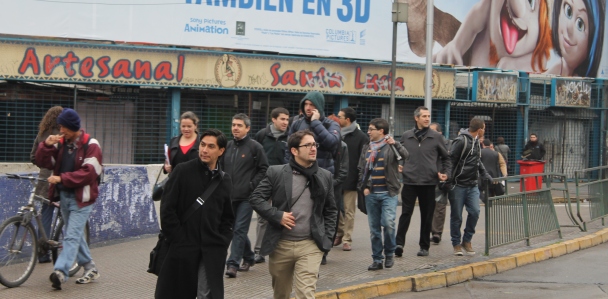 This time, they aren’t taking any chances. Along with the newly formed Metropolitan Directorate for Urban Transport (UTPM), Chilean leaders are consulting several parties that were left out of the process in 2006, including several national government agencies and the Greater Santiago municipalities of Lo Prado, Estación Central, Santiago and Providencia.
They are also consulting urban planning and public transport experts, that were contacted via our BRT CoE, to make sure they get the “details” right. Urban design experts from Brazil, Chile, Colombia, and Mexico joined Santiago’s authorities in envisioning an urban redevelopment concept for Alameda.
Over several days focused on design, the team developed the concept for an urban project that goes beyond bus operations. Using a “complete street” approach, we envisioned an 11 km (6.9 mi) corridor that will prioritize pedestrians, bicyclists and bus users, and will be better integrated with the existing Metro Line 1. The central park, an important icon for Santiaguinos that has fallen into disrepair, will be rejuvenated; and the historic buildings along the boulevard will receive attention. Good practices for advanced bus systems have also been followed – the plan calls for relocating the bus lanes from the curbside to the median, building stations with prepayment and level boarding, and connecting these stations directly with the underground Metro.
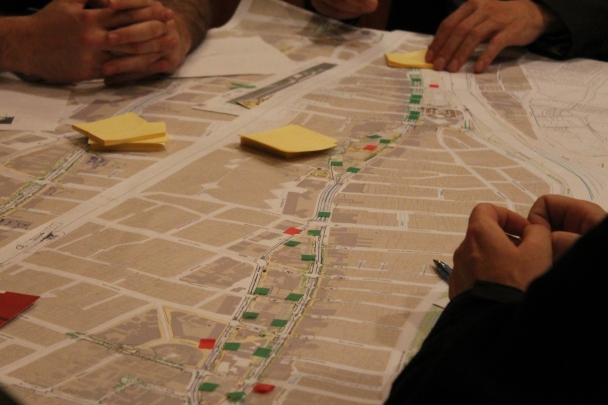 Improved express services and systems control will enhance the passenger experience. Carolina Tohá, the Mayor of Santiago, knows that this is more than a busway. She explained, “this project can be very beneficial […] it is expected to look at the city in all aspects, not just as a public transport improvement.”
The project is expected to be ready in late 2016, and has many challenges to face before its completion. Like many other projects, this visionary new corridor will require political leadership, technical capacity, and adequate funding. When it is finally completed, it will be an example for Latin America and the world, of how a city can go beyond transit to a holistic, accessible, integrated urban space: a “complete Alameda” for the people of Santiago.
The list of experienced public transport consultants shows how serious Santiago is about getting the details right. Among the experts were Pedro Szasz and Paulo Custodio, designers of several bus systems in Latin America, Africa and Asia; Salvador Herrera, Luis Zamorano, Claudio Sarmiento, and myself from Embarq and Embarq Mexico; André Jacobsen from Latin America’s Integrated Systems and BRT Association SIBRT; and Juan Carlos Muñoz, Ricardo Giesen, Rocio Hidalgo, Margarita Greene, Juan Carlos Herrera, and Marco Batarce, professors of engineering and architecture from Pontificia Universidad Católica de Chile and members of our Centre.
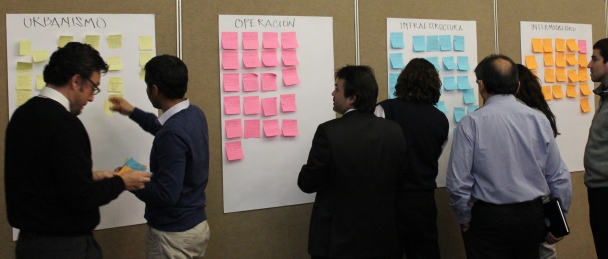 Santiago’s Directorate for Urban Transport, with the support of Pontificia Universidad Católica de Chile, organized the design charrette. With the help of these organizations, we walked and used the buses and the metro in the corridor, looked at the data and previous proposals to understand the issues, and then put our heads together to suggest the best possible urban project for the historic corridor. By involving multiple institutions at the national and local levels and design experts in the early stages of the planning process, Chile is setting itself up for success.
Tweet
BRT Workshop in Rio de Janeiro
Source: EMBARQ Brasil. All photos from EMBARQ Brasil.
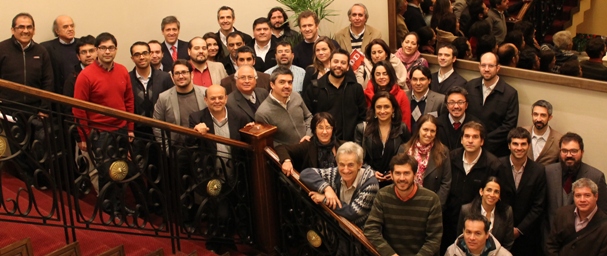
 Our Centre of Excellence hosted the Bus Rapid Transit (BRT) Workshop: Experiences and Challenges on July 12 in the Auditório Rio Ônibus at Rio de Janeiro. Organized by EMBARQ Brazil, sponsored by Fetranspor and VREF (Volvo Research and Education Foundations), the course brought together about 40 participants between professionals, operators, entrepreneurs and researchers of RT systems. Juan Carlos Muñoz (BRT CoE), Luis Antonio Lindau (EMBARQ Brazil) and Lélis Teixeira (Fetranspor), opened the meeting which was attended by international experts in the area.
In order to present the key issues in the design and successful implementation of BRT, the team of speakers was composed by Dario Hidalgo (EMBARQ), Luis Antonio Lindau (EMBARQ Brazil), Nigel Wilson (MIT), Juan Carlos Muñoz and Ricardo Giesen (Pontificia Universidad Católica de Chile), and Rosario Macario (Technical University of Lisbon), all members of our Centre.
 The first speaker of the morning, Hidalgo pointed out the main features and brief history of BRT systems and BHLS the world. The expert showed how the BRT systems become popular in recent years, from data presented by BRTdata.org platform that gathers information on BRT and bus lanes around the world. Besides from Brazil, currently India and China stand out because of their investments in transportation on wheels. «However, it is interesting to note that the BRT needs to be developed in accordance with the conditions of each city» says Hidalgo to cite the Metrobus in Mexico City, where the recent Line 4 has a different concept from the rest of the system, through narrow roads with lower vehicles.
At the end of the presentation, the expert from EMBARQ praised the effort of Rio de Janeiro in the construction and service quality of Transoeste BRT and added: «We hope more mayors opt for BRT. For its rapid implementation, is a system that can be created, executed and delivered in the same term, if there is political will, of course».
 Besides the quality, it is important to pay attention to safety. For Luis Antonio Lindau, a correct design of a BRT system can save many lives. «Being in a BRT today is much safer than being in a car», he says. According to the expert, well designed BRT projects can reduce 30% to 70% the number of accidents on roads where the corridors are implemented. To avhieve this goal, it is necessary to look again at the basic issues of road safety still in the design phase, many aimed at the Traffic Safety on Bus Corridors, produced by EMBARQ Brazil.
Lindau drew attention to some eminent risks as bus lanes in counter-flow and lack of signage for pedestrians and motorists. For the specialist, the solution is to prioritize the pedestrian ways at the implementation, with signs, walkways, etc.
Research to know users
 Nigel Wilson, professor and researcher at MIT, talked about the importance of observing the user experience. «Customer satisfaction surveys are essential to map people’s wishes in relation to the system. Thus, we go from a the static view of the operator to a dynamic and real view of the user», he explains. For the expert, the great tool that we have today is the smartphone. The device helps to gather data and has applications that make life easier for those who use public transport systems.
Then Wilson presented comparative numbers of a research conducted in the public transport systems of London and its challenges. The expert noted that pre-payment cards such as the Oyster in the English capital, facilitate data collection and can complement field research or those made via the internet.
 In the afternoon, data and users continued to be the focus of the presentations. Ricardo Giesen and Juan Carlos Muñoz, both researchers at PUC, talked about the importance of uncovering and use numbers effectively. «We need to transform data into information» said Giesen. The expert showed methodologies to manage the operation of the system and thus map its efficiency as well as the behavior of users.
Muñoz presented effective solutions that make transportation more efficient, and therefore more attractive. One idea that has been adopted by some Brazilian cities is the exclusive route for public transport, taking the bus congestion caused by excessive private cars. High capacity bus, strategically placed stops and prepayment were other possible measures aimed to streamline the operation of the system. «Rethinking the system stops the bus, using express lines, can substantially improve the quality of service» said Juan Carlos. Finally, the expert showed simulation results of the vehicles frequency optimization research.
Contractual and regulatory aspects
 The last presentation of the workshop was given by Rosário Macário, from the Technical University of Lisbon. The expert showed the impacts that occur in the structure of urban mobility when designing a new system, from the contractual view. According to Rosario, there are several factors that converge to a successful deployment that must be thought of holistically. «It takes a strategic view and not just operational. Integration with other modes of transport, for example, is essential to meet the need of people who use a system», she explains.
Rosario pointed to possible political challenges and economic risks to the implementation of systems. The institutional hierarchy, can sometimes become a barrier for the projects to be executed in a reasonable time and with quality. Also contracts must be conducted carefully and detailed with managers and operators to ensure the organization’s legal system.
Presentations available to download:
- Juan Carlos Muñoz: Bus Rapid Transit (BRT) Workshop: Experiences and Challenges / Future of BRT: Flexible Capacity Operations
- Dario Hidalgo: BRT and BHLS Evolution Worldwide
- Luis Antonio Lindau: Bus Rapid Transit and Traffic Safety
- Ricardo Giesen: Fare Collection in the Broader Payments Environment
- Nigel Wilson: The Customer Experience
- Rosário Macário: Regulatory and Contractual Aspects
Diseño de Servicios Expresos para Buses
Los servicios expresos, que en general se pueden definir como servicios que atienden a un subconjunto de los paraderos de un determinado corredor, son una estrategia de operación que puede ser beneficiosa tanto para los operadores como para los usuarios. Una reducción en el número de detenciones beneficia a los usuarios al reflejarse en una […]
An Algorithm for the Express Service Design Problem on a Corridor
Crowding in Public Transport: Objective and Subjective Measures
Crowding in public transport is becoming a growing concern as demand grows at a rate that is outstripping available capacity. To capture the user benefits associated with reduced crowding from improved public transport, it is necessary to identify the relevant dimensions of crowding that are meaningful measures of what crowding means to travelers. There are a number of objective and subjective measures of crowding promoted in the literature, with some objective measures being used as the basis of a standard of acceptable levels of practice. There is a disconnection between objective measures and subjective measures, the latter representing what matters to users. We illustrate the difference in a comparison of monitored crowding levels using crowding measures defined by the rail operator/authority in Sydney and Melbourne, Australia, and the level of crowding experienced by rail passengers from two recent surveys to reveal the significant gap between objective and subjective measures of crowding.
O papel do transporte coletivo na visão estratégica de cidades competitivas
Why talking cars will be good for buses
Source: The Atlantic Cities
 The National Highway Traffic Safety Administration is expected at some point later this year to make a milestone decision on whether future cars in America will be required to come with «connected vehicle» technology. In layman’s terms, this refers to the capacity of vehicles to communicate wirelessly with one another and with fixed infrastructure («I’m changing lanes,» «an accident just happened,» «I just slammed on my brakes»).
The concept conjures a futuristic world of chatty cars in which our vehicles might do a better job of interacting with each other than we do as drivers. But the prospect is not so far in the future. And some of the biggest beneficiaries may not be cars at all, but riders of public transit.
This is the theory of University of Arizona researchers Wei Wu and Larry Head. They’ve been simulating an idea called “bus lane with intermittent priority” – or BLIP – that would use connected vehicle technology to solve one of the bigger challenges posed by Bus Rapid Transit systems. Cities around the world are increasingly turning to the relatively affordable transit solution to move more passengers on dedicated bus lanes without the unpredictability of traffic congestion or the cost of constructing railways.
One problem with BRT, though, is that plenty of drivers aren’t eager to see whole lanes of busy roadway blocked off exclusively for bus use. So this is where connected vehicle technology could come in. If buses and cars could communicate with each other, drivers could use BRT lanes when buses aren’t around.
«As the bus moves through the network,» Head explains, «it broadcasts a message that says, ‘Here I am, I’m a bus. Here I am, I’m a bus. Get out of my lane.’»
A bus moving down a busy street, for instance, might project that message to vehicles within 300 yards of it. This is an animation, courtesy of Head and Wu, of exactly what this might look like:
blipvideo from The Atlantic Cities on Vimeo.
The animation assumes that not all cars in this near future would have connected vehicle technology. Those older models would be barred from the bus lane; connected cars (in green) would have access to it. In the animation, cars that have just been alerted of an approaching bus turn red (and then green once they’ve moved out of the way). Cars traveling safely behind the bus are blue.
The whole idea suggests that technology could help us become smarter sharers of roadway. In turn, that also means we might need less of it to efficiently transport more people.
Tweet
Barriers to planning and implementing BRT systems
Exploring the performance limit of a single lane per direction Bus Rapid Transit Systems (BRT)
Despite its booming growth, the BRT industry is still far from reaching maturity. As trial-and-error and empirical techniques were largely used as insights for innovations in design, some BRT systems achieved great successes in terms of performance and became world-class flagships. Other systems would be most properly classified as busway systems requiring major improvements. In […]
BRT e Corredores Prioritários para Ônibus: Panorama no Continente Americano
Oportunidade para Qualificar e Inovar o Transporte Coletivo por Ônibus nas Cidades Brasileira
Buses in Brazilian cities are trapped in congestion that disrupts both the efficiency and the reliability of a service that is vital for the population. The recent people´s outcry for a higher quality transit system, associated to an increasing private motorization in urban areas, demands opportunities for bus innovations that go beyond high-performance BRT (Bus […]
Professor David Hensher wins the Smart 2013 Premier Award
At a gala dinner in Sydney attended by over 500 people on Thursday 27 June 2013, Professor David Hensher, Founding Director of the Institute of Transport and Logistics Studies (ITLS) in the Business School at The University of Sydney, and member of our BRT Centre of Excellence was recognised with the Smart 2013 Premier Award for Excellence. It is presented every two years to an individual in recognition of outstanding contribution to the profession of supply chain management in Australia.
Described as the Golden Logies award in Supply Chain Management previous recipients are:
- 1995 John David, MD of David’s Holdings
- 1997 Gerry Hatton, MD of Mannesman Dematic Colby
- 1999 Major General Des Mueller AO, Vice Chief of Defence Force
- 2001 Dr John Gattorna, Managing Partner at Accenture
- 2003 Chris Corrigan, MD of Patricks Corp
- 2005 Keith Campbell OAM, National President of LAA
- 2007 Roger Corbett, CEO of Woolworths Ltd
- 2009 Lindsay Fox AO, Founder & Director of Linfox
- 2011 Air Vice Marshall Marg Staib AM, CSC, Chief of Joint Logistics Command
Presenting the Individual Award for Excellence award, the Chair of the Awards Committee (Allan A. Murray CSM) stated that the selection was based on “an individual who has more than 10 years in Procurement, Supply Chain or Logistics, has made a significant contribution to their field, and has demonstrated innovation and creativity (other than the traditional supply chain improvements), including business model innovation, innovative ways to reach new markets and creating opportunities for people engaged in supply chain.”
Tweet
Evaluation of Bus Priority Strategies for BRT Operations
Bus Rapid Transit (BRT) uses strategies such as exclusive bus lanes, off-vehicle fare collection, high quality vehicles and stations, signal priority, among others. Transit Signal Priority (TSP) is frequently seen as an option to improve performance of public transportation systems at the operational level. TSP is an operational strategy that aims at reducing the delays […]
Impacto de elementos de projeto no desempenho operacional de sistemas BRT de faixa única sem ultrapassagem
The performance of a BRT corridor with a single lane per direction and no overtaking is investigated, in terms of capacity and operating speed, by simulating 324 alternative scenarios. The simulation runs comprised a range demand levels, boarding and alighting rates, station spacing, vehicle loading, number of berths per station, and traffic signal positioning in […]
Model for the Optimal Location of Bus Stops and Its Application to a Public Transport Corridor in Santiago, Chile
The location and number of bus stops are key to the operational effi- ciency of the services that use them; these criteria affect commercial speed, reliability, and passenger access times. In the defining of the number of stops, a trade-off arises between reduced access time, which widens a route’s coverage area, and both the operational […]
Metrobuses in Sydney: how high capacity and high frequency services are benefiting the Metropolitan fringe
Effects of bus rapid transit on housing price: evidence from Sydney, Australia
Comparison of Dynamic Control Strategies for Transit Operations
Real-time headway-based control is a key issue to reduce bus bunching in high frequency urban bus services where schedules are difficult to implement. Several mechanisms have been proposed in the literature, but very few performance comparisons are available. In this paper two different approaches are tested over eight different scenarios. Both methodologies solve the same problem, the former based on a deterministic optimization over a long-term rolling horizon, while the latter proposes a hybrid predictive approach considering a shorter horizon and a stochastic evolution of the system. The comparison is conducted through scenarios that include three different dimensions: (i) bus capacities which can be reached or not, (ii) service frequencies, considering high and medium frequency services and (iii) different load profiles along the corridor. The results show that the deterministic approach performs better under scenarios where bus capacity could be reached frequently along the route while the hybrid predictive control approach performs better in situations where this does not happen.
Workshop 2: Bus rapid transit as part of enhanced service provision
Workshop 2 focused on the role of BRT as part of enhanced public transport service provision. Discussion topics included case studies around the world; improved performance and operations; and better contracts, institutional settings and enhanced policies. BRT was identified as a vital component of modern public transport systems due to its ability to provide high performance and rapid implementation at a lower cost than comparable rail transit. The participants concluded that on top of improving trunk transit corridors, it is important to look to the first and last kilometers and the connections among transport modes. In addition, it is important to consider all dimensions, not just the technical issues. The workshop identified the desirable ingredients for BRT success, created a table of bus based options for different applications and a list of research topics.
Transantiago, five years after its launch
We review the current situation of Transantiago, the fully integrated public transport system covering the Santiago Metropolitan Area in Chile, identifying its current strength, flaws and challenges. The system captured worldwide attention after its premature implementation in February 2007, before most of the infrastructure and system conditions required by its designers were in operation. The […]
Subjective valuation of the transit transfer experience: the case of Santiago de Chile
The still controversial Transantiago public transport system, in Santiago de Chile, has a topological structure that often requires its users to make one or more transfers to reach their destinations. This was rarely necessary in the previous non-integrated system and users reacted with unexpected displeasure when it started even though fare integration in the new […]
Lima advances in its program of complementary public transport corridors (in Spanish)
Por Darío Hidalgo.
 Lima Metropolitana avanza en la implantación de un sistema de corredores complementarios para mejorar las condiciones de operación del transporte público en las principales vías de la ciudad. Este sistema, intermedio entre el transporte convencional de buses y los corredores segregados de alta capacidad, complementan el sistema BRT Metropolitano y el Tren Eléctrico – en ampliación, con expectativa de desarrollo en 4 líneas.
El concepto es muy valioso, y puede entenderse como una solución intermedia, en la medida que avance la implantación de los corredores de transporte masivo. El sistema de corredores es fundamental eliminar la competencia en la vía por los pasajeros, mejorar las condicines de la flota, mejorar la utilización de los buses con una operación más eficiente, dignificar las condiciones laborales de los conductores, y aumentar la capacidad de verificación de las autoridades sobre la presentación del servicio.
El proyecto avanza en su etapa de planeación y gestión, con expectativa de apertura de licitaciones de operación en las próximas semanas. Fue parte central de la discusión durante el Foro de Sistemas Integrados organizado por la Fundación Transitemos y la Municipalidad de Lima. Al mismo tiempo, fueron presentadas experiencias internacionales útiles en la planeación y gestión de la reforma promovida por al adminsitración de la alcaldesa Susana Villarán de Lima. Se resaltaron las experiencias de Santiago, Patricio Pérez (Coordinación de Transporte de Santiago, MTC Chile); León, Amilkar López (Dirección General de Transporte de León, Guanajuato, México); Bogotá – Darío Hidalgo (EMBARQ), y de tendencias regionales Paulo Mota (Belo Horizonte, Brasil).
La información del evento, incluídas las presentaciones se encuentra disponible en en el sitio web del evento.
El foro resaltó la necesidad de este tipo de reformas, como parte del desarrollo urbano sostenible de las ciudades; pero mostró también que se trata de procesos muy complejos, que requieren una decisión política fuerte y con continuidad en el tiempo, y una buena preparación técnica y acompañamiento en implantación. En Lima en particular, hay dos áreas fundamentales donde puede complementarse el trabajo realizado por el equipo de Protransporte y la Municipalidad de Lima: mejorar el diseño del proceso de implantación y avanzar en soluciones de infraestructura para agilizar el tráfico de los corredores y facilitar la integración entre los distintos servicios. Compartir experiencias desarrolladas por los miembros de la Asociación Latinoamericana de Sistemas Integrados SIBRT, y del conocimiento recabado en nuestro Centro de Excelencia ALC-BRT es muy valioso para avanzar con éxito en estos procesos.
Tweet
Analysis and evaluation of different headway control strategies for BRT: simulated with real data
Transport research needs
The Changing Publicness of Public Transport
Limitations in the Implementation of Real-Time Information Control Strategies Preventing Bus Bunching
Jaime Lerner: Architect of possible dreams
Source: SIBRT
In an exclusive interview, Jaime Lerner talks about the challenges that public transportation is facing in Brazil and his expectations for the III SIBRT Conference.
 The architect and urban planner Jaime Lerner – former Mayor of Curitiba for three terms and former Governor of Paraná for two terms – regards large urban center problems with a unique point of view. For him, the voice of the majority that repeats and reinforces the discourse that large cities are doomed to failure when it comes to urban mobility is a blurred vision of the city, «it is like a body receiving people’s life; not just a group of concrete and roads».
Today, the man who launched his gaze over the city of Curitiba by creating new models and concepts of urbanization in 1971, is now dedicating his time to Jaime Lerner Institute, he is also a consultant for the UN as regards urban matters and is the President of architectural firm that bears his name.
Elected in 2010 by Time magazine as one of the 25 most influential thinkers, Jaime Lerner believes the private car in the future will look like cigarette nowadays: «It can be used, but it is recommended not to do it so that you will not annoy people.”
Invited as a keynote speaker at the Third SIBRT Conference of Best Practices in Latin America (Belo Horizonte, June 4-7), Lerner said, among other things, about his ideas for urban mobility success, the benefits of investment in surface transport – especially BRT – and the importance of changing paradigms of people who «do not change their concepts if there are no better alternatives.» So he proposes a quality public transport and viable for all.
Check out the interview:
SIBRT – What are the main deficiencies of the public transport systems in major cities in Brazil?
Jaime Lerner – The main deficiency is the lack of trust of people in public transport, which makes them opt for the private car. In my opinion, Brazil is a country that has the best of the conditions to solve problems regarding urban mobility: we have the technology, funding programs and the recent willingness to cooperate public transport companies, which are ready to improve. This is the good time to make things change!
SIBRT – What are the most urgent measures to remedy these deficiencies – or at least minimize them?
Jaime Lerner – What is missing to complete this positive scenario is a political decision including technical commitment to overcome the current barriers. The system should be integrated so that it can satisfy people’s needs. The secret is to have a metro that operates well and which is integrated with effective bus routes services and other surface solutions. We have to use everything. The bus is now responsible for 70%, 80% current transport.
The government often does not know what he wants and, often, it is difficult to convince people that there will be improvements. The vision of the city should also be reconsidered: it is necessary for people to have an integrated view of the city, as it is a structure of life, work, leisure, all together. I cannot think of the place of residence, place of work, entertainment apart from one another.
SIBRT – The expression «metronizar» the bus is yours: What does that mean exactly?
Jaime Lerner – It means giving to the bus the same performance as the subway, where the user pays his fare outside of the station – and not inside the bus – which speeds the entry of passengers. Accelerating access through boarding at the same level and reserved lanes for buses is a way to provide more convenience, comfort and safety. And above all, ensuring frequency is very important to enhance credibility. With the bus you can reach a frequency of one minute, with subway it is not possible.
People simply will not believe in an alternative if the latter is not better. We have to provide a high quality system to change the paradigm. The car will be like smoking in the future. You can have a car, but you will be advised not to use it in order not annoy people.
SIBRT – What are the main assets/differences of surface transport?
Jaime Lerner – The big asset is the cost, which is 50 to 100 times less per kilometer compared to the subway. Moreover, the implementation speed is 2 to 3 years. The operation pays the cost, if well planned i.e. there is no need for subsidies and it is not necessary to sacrifice generations to provide a quality transportation system.
SIBRT – Do you believe that surface transport is the future of urban transportation in Brazil and in the world?
Jaime Lerner – The future is on the surface, but it is essential that each BRT implementation is well operated integrated to land use and growth of cities. Brazil is the country that has the best know-how in BRT system – system which is currently implemented in 156 cities all over the world, such as Bogota and Mexico City, in Europe, China and the U.S.
For example, I do not believe in the expression “transport corridor”. I prefer to use transportation axis integrated to urban planning. The corridor has no relation to land use.
SIBRT – In your opinion – why the transport sector is still not considered as a priority in public policies in Brazil?
Jaime Lerner – I think there is a reaction against simple solutions from the government. In Brazil, this is not possible. We live in a false dilemma: either the car or the subway. The reality is that we cannot think of a single type of transport. It is very difficult to have a subway system like in Paris or London, which were deployed for more than 100 years. What we know is that in São Paulo it-self, 84% of trips are made on the surface. Then it is necessary that the surface is well made. In some cases, in Brazil, BRT implementation has not been done with an integrated view of the city.
SIBRT – Curitiba is a world reference in public transport thanks to the implementation of BRT over 30 years ago, during your term. What factors determine the success of this model that has already been adopted worldwide?
Jaime Lerner – Curitiba worked with an integrated view of the city, which began to be designed with the structure: life, work, leisure and mobility which all worked together. What we did was to use this concept, and most importantly, make good use of the land. Therefore, we are the benchmark.
SIBRT – In June, the Third SIBRT Conference of Best Practices in Latin America will be held in Belo Horizonte. What are your expectations for the event?
Jaime Lerner – My expectation is that the implementation of BRT systems in Brazil occurs more rapidly. The great resistance came from bus operators. This resistance no longer exists. I hope that this Conference will promote an action plan in the cities and that cities will contemplate their systems with more quality. This needs to happen now!
Tweet